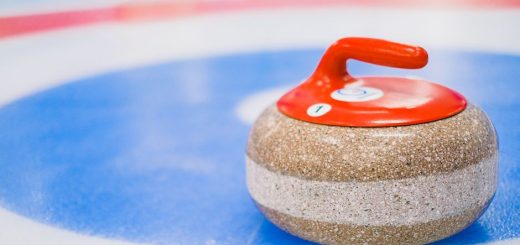
Where Did Curling Originate? The Scottish Roots of the Sport
Curling originated in Scotland. The sport developed from a simple winter game in which players slid stones across frozen ponds, lochs, and marshes. Its exact starting point is difficult to fix to one date, but historians generally place the emergence of recognizable curling in Scotland during the sixteenth century.
What is the earliest evidence of curling?
The strongest early evidence comes from Scotland rather than from a single known inventor. A written record from 1541 describes a man sliding a stone across ice at Paisley, near Glasgow. This document is often treated as the earliest written reference to an activity resembling curling.
There is also a famous 1565 painting by Pieter Bruegel the Elder that shows people playing on ice in the Low Countries. Some observers have suggested that it depicts an early form of curling, but the image does not provide conclusive proof that modern curling began there. The distinction matters: ice games involving sliding objects existed in several parts of Europe, while the organized sport that became curling took shape most clearly in Scotland.
Early Scottish players probably used naturally shaped stones collected from riverbeds or fields. The ice was uneven, the stones varied greatly, and the rules differed from one community to another. Curling was initially a practical local pastime rather than the standardized competition seen today.
How Scottish curling became an organized sport
During the seventeenth and eighteenth centuries, curling became increasingly popular in Scottish communities, especially during cold winters. Local groups formed clubs, arranged matches, and developed customs for deciding the scoring and playing area. The Kilsyth Curling Club, founded in 1716, is commonly recognized as one of the earliest curling clubs in the world.
As the sport spread, Scottish players refined the equipment and techniques that define curling. Stones became more consistent, players learned to influence a stone’s curl, and sweeping developed as a way to affect its speed and path. Clubs also began keeping written rules, although variations continued for many years.
The Grand Caledonian Curling Club was established in 1838 and later became the Royal Caledonian Curling Club. Its rules helped create a common framework for matches in Scotland and abroad. This standardization explains why Scotland is regarded not only as the birthplace of curling but also as the place where the modern form of the sport was organized.
How curling spread beyond Scotland
Scottish emigrants, soldiers, merchants, and workers carried curling to other countries. It became established in Canada during the eighteenth and nineteenth centuries, where the cold climate provided reliable natural ice and helped the sport grow rapidly. Canada eventually became one of curling’s major international centers.
The game also spread to the United States, Switzerland, Sweden, Norway, and other countries. Indoor curling facilities later made it possible to play on prepared ice throughout the season, reducing the sport’s dependence on weather. Modern stones, carefully maintained sheets, timed games, and international rules are all later developments built on the Scottish game.
Was curling invented in Canada?
No. Canada played a major role in expanding and modernizing curling, but the sport’s historical origin is Scottish. The earliest written evidence of curling-like play is associated with Scotland, and the first clubs and widely adopted rules developed there.
Canada’s importance should not be understated. Canadian clubs helped make curling a major competitive sport, produced generations of elite players, and contributed to the development of modern championship play. It is more accurate to describe Scotland as curling’s birthplace and Canada as one of its most influential later homes.
When did curling become an Olympic sport?
Curling appeared at the 1924 Winter Olympics, although it was not continuously included afterward. It returned as a demonstration sport at several later Winter Games before becoming an official Olympic sport at the 1998 Winter Olympics in Nagano, Japan. Men’s, women’s, and mixed doubles events are now part of the Olympic program.
The Olympic version uses the same basic Scottish principles: teams slide granite stones toward a target, known as the house, while sweeping can alter a stone’s distance and line. The equipment and ice are highly specialized, but the central idea remains the old Scottish practice of sliding a stone over frozen ground.