How to Score Goals as a Striker: Finishing, Movement and Match-Day Decisions
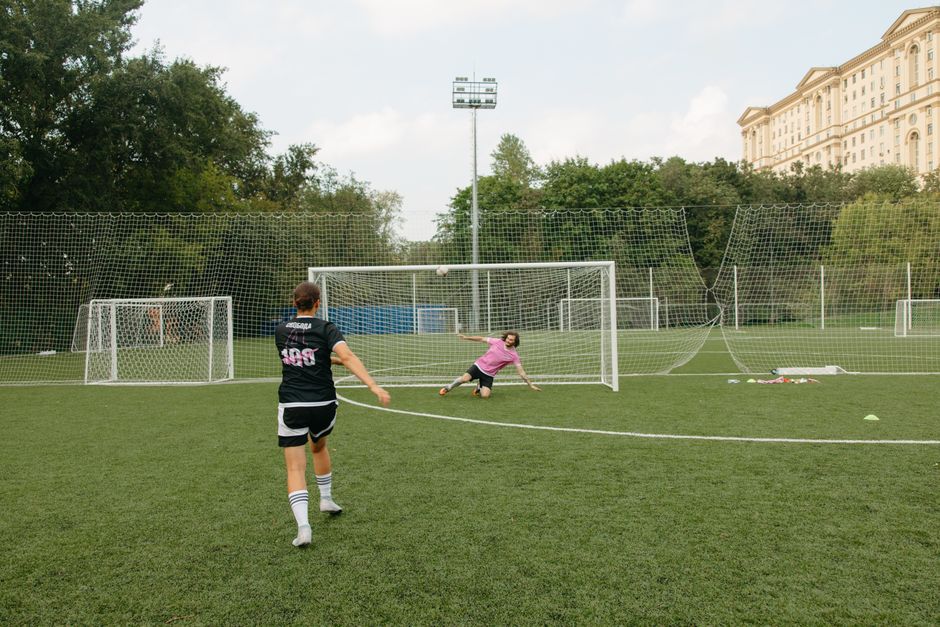
To score more goals as a striker, create better chances before you shoot. The most effective forwards combine intelligent movement, quick finishing, calm decisions and a reliable technique under pressure. You do not need to shoot constantly; you need to arrive in dangerous spaces and choose the right finish.
Improve your movement before the ball arrives
Good striker movement makes finishing easier. Defenders are most vulnerable when they must turn, track a runner or decide whether to follow you or protect the space behind them.
- Check away, then attack: Move away from the defender first, then accelerate into the gap when the passer can play the ball.
- Stay on the blind side: Position yourself where the centre-back cannot see both you and the ball.
- Curve your runs: A curved run can keep you onside while taking you across the defender’s path.
- Attack the near post: Near-post runs often create first-contact chances from crosses and low passes.
- Delay your run: Arriving slightly later can leave you unmarked when defenders focus on the ball.
Study the defender’s body position. If the defender faces the ball, make a run behind them. If they are already running toward their own goal, check toward the ball or move across them to receive a cutback.
Choose the right finish
Scoring goals as a striker is not only about striking the ball hard. The best finish depends on your distance from goal, the goalkeeper’s position, your balance and the time available.
| Situation | Useful finish | Main detail |
|---|---|---|
| Close-range chance | Side-foot finish | Open your body and direct the ball into the corner. |
| One-on-one | Placed finish or controlled touch around the goalkeeper | Look up before shooting and wait for the goalkeeper to commit. |
| Low cross | First-time finish | Meet the ball early rather than taking an unnecessary touch. |
| Ball bouncing in the box | Simple contact | Prioritise accuracy and clean contact over power. |
| Shot from outside the box | Laces or controlled curl | Keep your head steady and strike through the intended line. |
Use the inside of your foot when placement matters. Use your laces when the ball is moving away from you or you need more power. A chipped finish can work when the goalkeeper rushes out and lowers their body, but it should be based on the goalkeeper’s position rather than used automatically.
Become more composed in front of goal
Many missed chances happen because the striker decides too late. Before the ball reaches you, scan the goalkeeper, defenders and available corners. This gives you a plan and reduces rushed touches.
- Take your final touch away from pressure and toward the space you want to shoot into.
- Keep your head still through contact.
- Relax your upper body instead of leaning backward.
- Keep your standing foot beside the ball when placing a finish.
- After a mistake, reset immediately and prepare for the next chance.
In a one-on-one, do not stare at only one corner. Carry the ball under control, force the goalkeeper to move, then finish into the space they leave. If the goalkeeper stays deep, a placed shot may be available. If they rush forward, a touch around them or a lifted finish may be more effective.
Train the finishing skills that appear in matches
Finishing practice should resemble match situations. Repeating stationary shots from the same spot improves technique, but it does not fully prepare you for pressure, changing angles or limited time.
Useful striker drills
- Cutback finishing: Start near the penalty spot, check away, attack the space and finish a pass played behind the first defender.
- One-touch crossing drill: Make near-post and far-post runs, then finish crosses with either foot.
- One-on-one drill: Approach from different angles and practise placing, rounding and lifting the ball over the goalkeeper.
- Rebound drill: Follow every shot and react to saves, deflections and loose balls.
- Fatigue finishing: Add short sprints or changes of direction before receiving the ball so you must finish while tired.
Track more than goals. Record shots on target, first-touch quality, chances created by your movement and finishes with your weaker foot. These measures show whether your scoring ability is improving before the results become obvious in matches.
Use both feet and improve your weaker foot
Defenders can close down a striker who always needs the same foot. A reliable weaker foot lets you finish first time, protect the ball and shoot before a defender blocks the angle.
Practise short sessions frequently: 20 controlled passes against a wall, 20 first-time finishes and 20 shots after a directional touch. Work from both sides of the box and vary the service. Accuracy should come before power. The aim is to make the weaker-foot action dependable enough to use without hesitation.
Make better decisions in the penalty area
Use a simple priority order when a chance develops:
- Finish first time if the ball is set up well and a defender is closing.
- Take one touch if it improves your angle or moves the ball away from pressure.
- Pass if a teammate has a clearly better chance and the passing lane is safe.
- Protect the ball if the chance has disappeared and your team needs to retain possession.
A common striker mistake is taking an extra touch after the shooting window has opened. Another is forcing a shot through several defenders when a cutback or layoff is available. Efficient forwards recognise the best option quickly.
Common reasons strikers miss chances
- Watching the ball instead of scanning: This leads to poor positioning and late reactions.
- Trying to generate power by leaning backward: The shot usually rises over the goal.
- Running too early: An offside position removes a promising chance.
- Taking too many touches: Defenders and goalkeepers gain time to recover.
- Ignoring rebounds: Following the shot can create easy second chances.
- Training only the strong foot: This makes your finishing predictable.
Frequently asked questions
How can I score more goals in football?
Improve your movement, practise realistic finishing situations, scan before receiving the ball and learn to finish with both feet. Consistent training matters more than taking random high-volume shots.
Where should a striker stand in the box?
Move between defenders, stay on their blind side and adjust your position according to the ball. Near-post, central and far-post spaces all become available at different moments, so avoid standing still in one area.
How do I get better at one-on-one finishing?
Approach under control, look at the goalkeeper’s position and decide whether to place the ball, round the goalkeeper or lift it over them. Practise from both sides and include realistic pressure.
Should a striker shoot hard or place the ball?
Place the ball when you have time and a clear corner. Use power when the distance, angle or pressure makes a quick strike more effective. Accuracy is usually the priority inside the penalty area.