Five Equipment in Volleyball: What Each Item Does

When someone asks for the five equipment in volleyball, they usually mean the main items needed to set up and officiate a court. The essential list is the volleyball, net, net posts, antennae, and referee stand. A proper court, boundary lines, lighting, scorekeeping equipment, and player safety gear are also important, but they belong to the wider group of volleyball facilities and accessories.
The five essential pieces of volleyball equipment
1. Volleyball
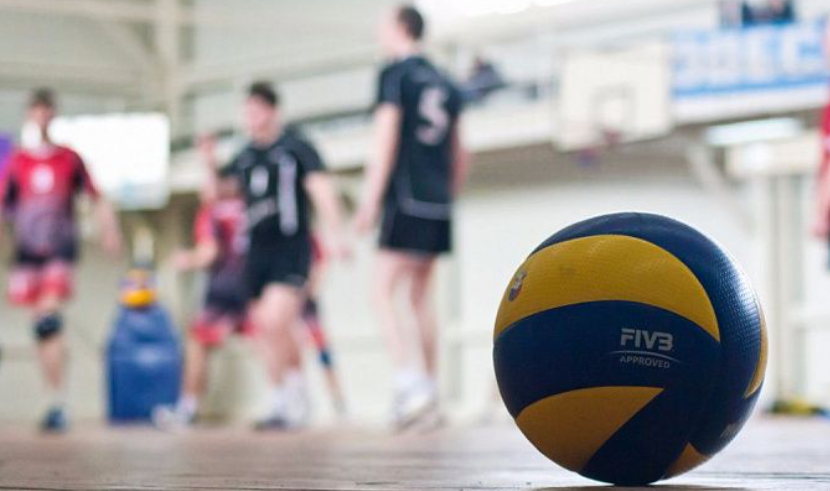
The ball is the central piece of equipment in the sport. An indoor volleyball is normally spherical, lightweight, and covered with a durable synthetic or leather-like material. Its size, weight, and internal pressure should suit the competition level. Training balls may be softer, while match balls are selected for consistent flight and handling.
2. Volleyball net
The net divides the two teams and determines whether an attack, block, or serve crosses legally into the opponent’s court. A regulation net has a strong top band and side bands that make its edges easier to see. Net height varies by competition, so organisers should check the rules for the age group and playing format rather than using one height for every match.
3. Net posts
Net posts support and tension the volleyball net. They should be stable, correctly aligned, and positioned outside the court boundaries so they do not interfere with play. Padding around exposed posts is recommended because players may chase the ball beyond the court. Portable posts are useful for schools and community venues, while fixed posts can provide a more permanent setup.
4. Antennae
Antennae are flexible rods attached to the net near the sidelines. They mark the vertical crossing space over the net. A ball must pass between the antennae to cross legally; touching an antenna or crossing outside it usually results in a fault. These are sometimes called volleyball net antennas or side markers.
5. Referee stand
The referee stand, also called a volleyball referee platform, allows the first referee to view the net and both sides of the court clearly. It should be stable, height-adjustable when possible, and positioned beside the net without creating a collision hazard. Some casual games do not use a raised stand, but it is valuable for organised matches.
Facilities needed for a complete volleyball setup
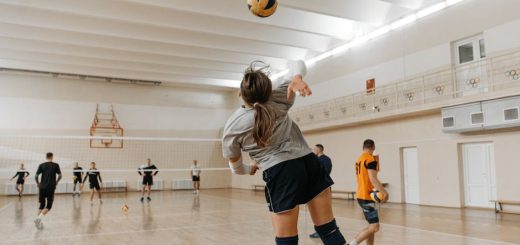
The five items above do not make a complete playing venue by themselves. The court needs a flat, non-slippery playing surface with clearly marked boundary lines and a centre line. Indoor courts also require enough free space around the sidelines and end lines so players can move safely after a dig or serve.
Other useful volleyball court equipment includes a scoreboard or manual score flip board, line judges’ flags, a score table, ball carts, and a pump with a pressure gauge. Lighting should be bright and even, without glare that makes it difficult to track a high ball. Outdoor volleyball may use sand, weather-resistant posts, boundary tapes, and anchors that prevent the equipment from shifting.
Player equipment: essential, optional, and easy to confuse
Player clothing is different from the equipment used to build the court. Volleyball shoes are designed to provide grip and lateral support on indoor floors. Knee pads protect the knees during repeated floor contact, especially for defensive players. Comfortable athletic clothing allows unrestricted movement, while ankle braces may help players who need additional support.
These items improve comfort and safety, but they do not replace the five court essentials. A school assignment asking for five volleyball equipment items may accept answers such as a ball, net, posts, antennae, and referee stand. If the question is specifically about player gear, the expected answer may instead include shoes, knee pads, jersey, shorts, and socks.
How to choose equipment for different situations
- School or recreational play: prioritise a durable volleyball, padded posts, a visible net, and easy-to-use boundary lines.
- Club training: add several practice balls, a ball cart, a scoreboard, and replacement antennae so drills are not interrupted.
- Competitive matches: use equipment that matches the governing rules, including the approved net height, court markings, referee platform, and scoring system.
- Outdoor volleyball: choose weather-resistant components and secure every post because wind and uneven ground can make indoor equipment unsafe.
Common equipment mistakes
Loose net tension can change the height and shape of the net, while poorly secured posts create a serious injury risk. Another common mistake is placing the posts on or inside the sideline instead of outside it. Using a ball with the wrong pressure can also affect control and increase discomfort during repeated practice.
Before play begins, check that the net is level, the antennae are attached correctly, the court lines are visible, and the referee stand is stable. Remove damaged equipment rather than covering sharp edges temporarily. These checks take little time and prevent many avoidable interruptions.
Frequently asked questions
What are the five main equipment in volleyball?
The five main items are the volleyball, net, net posts, antennae, and referee stand. Some school lessons use player items such as knee pads or shoes in their answer, so the intended category should be checked.
Is a volleyball court equipment or a facility?
A volleyball court is generally considered a facility or playing area. It includes the surface, boundary markings, centre line, and free zones. The net and its supporting hardware are usually classified as equipment.
Which volleyball equipment is most important for beginners?
A correctly sized ball, a stable net system, safe court markings, and suitable shoes are the most practical starting points. Knee pads are useful for players who practise frequent dives or defensive movements.