Curling Positions Explained: Roles, Order and Strategy
Curling positions define who throws each stone, who sweeps, and who directs the team’s strategy. In a traditional four-player team, the positions are lead, second, vice-skip and skip. Each player has a specific job, although strong teams expect everyone to understand shot selection, sweeping and game situations.
The four curling positions
Lead
The lead throws the first two stones for the team in each end. These stones are often used to place guards in front of the house or begin building a scoring position. After delivering both stones, the lead usually sweeps for the rest of the end.
A good lead needs accurate draw weight, consistency and the ability to place guards precisely. The lead is not normally responsible for calling the overall strategy, but their opening shots can determine which options are available later.
Second
The second throws the third and fourth stones. This position often involves a mixture of draws, takeouts and clearing guards, depending on the state of the house. The second also sweeps frequently and must be able to judge stone speed quickly.
In many teams, the second and lead work together as the main sweeping pair. They communicate with the skip about whether a stone is curling correctly and whether it has enough weight to reach its target.
Vice-skip
The vice-skip, sometimes called the third, throws the fifth and sixth stones. They usually handle more complex shots as the end develops, including precise draws, freezes and takeouts. The vice-skip often sweeps while the skip delivers a stone.
After the skip’s stones have been delivered, the vice-skip takes over as the team’s on-ice strategist. They discuss the final shots, measure stones if needed and help determine the score at the end.
Skip
The skip is the team captain and normally throws the seventh and eighth stones. Standing at the far end of the sheet, the skip chooses the shot, communicates the required line and weight, and directs the sweepers.
The skip must read the house, anticipate the opponent’s response and manage risk. Skip stones are often decisive because they are played after most of the other stones are already in position. A skip also needs reliable sweeping and shot-making skills, since they may have to deliver difficult draws or takeouts under pressure.
Who throws first in curling?
The throwing order is normally lead, second, vice-skip and skip. Each player delivers two stones in that order, for a total of eight stones per team in a standard end. Players alternate with the opposition, so the lead from one team throws, followed by the other team’s lead, before the seconds begin.
The skip stands in the house to call the shot while their teammates deliver. When the skip throws, the vice-skip takes over that role at the opposite end. This arrangement explains why the vice-skip is also known as the team’s on-ice deputy.
What do curlers do after delivering a stone?
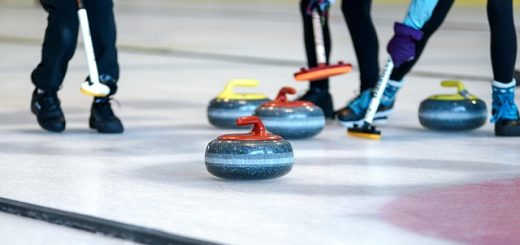
Once a player releases a stone, they usually join the sweeping team. Sweepers influence the stone by brushing the ice ahead of it. Sweeping can help a stone travel farther and can reduce the amount it curls.
The skip or vice-skip watches the stone and gives instructions such as “sweep,” “clean” or “whoa.” Sweepers must judge speed, line and the position of other stones while avoiding contact with stones that are not in play. The player who delivered the stone may also sweep, although they often watch its path first and then join the others.
Curling positions in mixed doubles
Mixed doubles curling uses two players, one woman and one man, rather than four. There is no fixed lead, second, vice-skip and skip structure. Instead, one player commonly throws the first and last stones while the other throws the middle stones, but teams can decide how to divide those deliveries within the rules.
One stone is placed in a set position before each end begins, and both players usually have sweeping and tactical responsibilities. Because there are fewer stones and players, mixed doubles curlers must switch quickly between throwing, sweeping and calling shots.
Positions in wheelchair and other curling formats
Wheelchair curling is generally played with four athletes, although teams may include a substitute. The positions and throwing order resemble traditional four-player curling, but sweeping is not allowed. Players must control line and weight through delivery technique, and teammates use verbal communication to help direct the shot.
In some recreational or club games, teams may use fewer players or adjust the normal roles. A player can therefore take on responsibilities associated with more than one position, but the standard four-player structure remains the easiest way to understand curling strategy.
Which curling position is hardest?
No single position is hardest for every player. The skip carries the greatest strategic responsibility because they call the game and deliver the final stones. The lead must be highly consistent because an inaccurate opening guard can limit the team’s choices. The second needs versatility, while the vice-skip combines shot-making with leadership during the skip’s delivery.
At higher levels, every position demands accurate draws, controlled takeouts, effective sweeping and a clear understanding of game strategy. Players may specialise in one role, but teams are stronger when each curler can perform the basic duties of every position.
Frequently asked questions about curling positions
Can the skip throw first?
Yes, teams can arrange their lineup within the competition rules, but the traditional order is lead, second, vice-skip and skip. The skip usually throws the final two stones because those shots have the most information available to them.
Does the skip always call every shot?
Usually, but not always. The vice-skip directs play while the skip is delivering, and teams may share tactical decisions. In unusual situations, players can also communicate before the shot is called.
What is the difference between a vice-skip and a second?
The second usually throws earlier stones and focuses heavily on sweeping and a mix of draws and takeouts. The vice-skip throws later, handles more complex positions in the house and takes over the skip’s tactical duties when the skip throws.
Are curling positions the same for men’s and women’s teams?
Yes. The standard four-player roles and throwing order are the same. The main differences between competitions concern the format, team composition and event rules rather than the names of the positions.