How to Play Football: Rules, Skills, Positions, and Training Basics
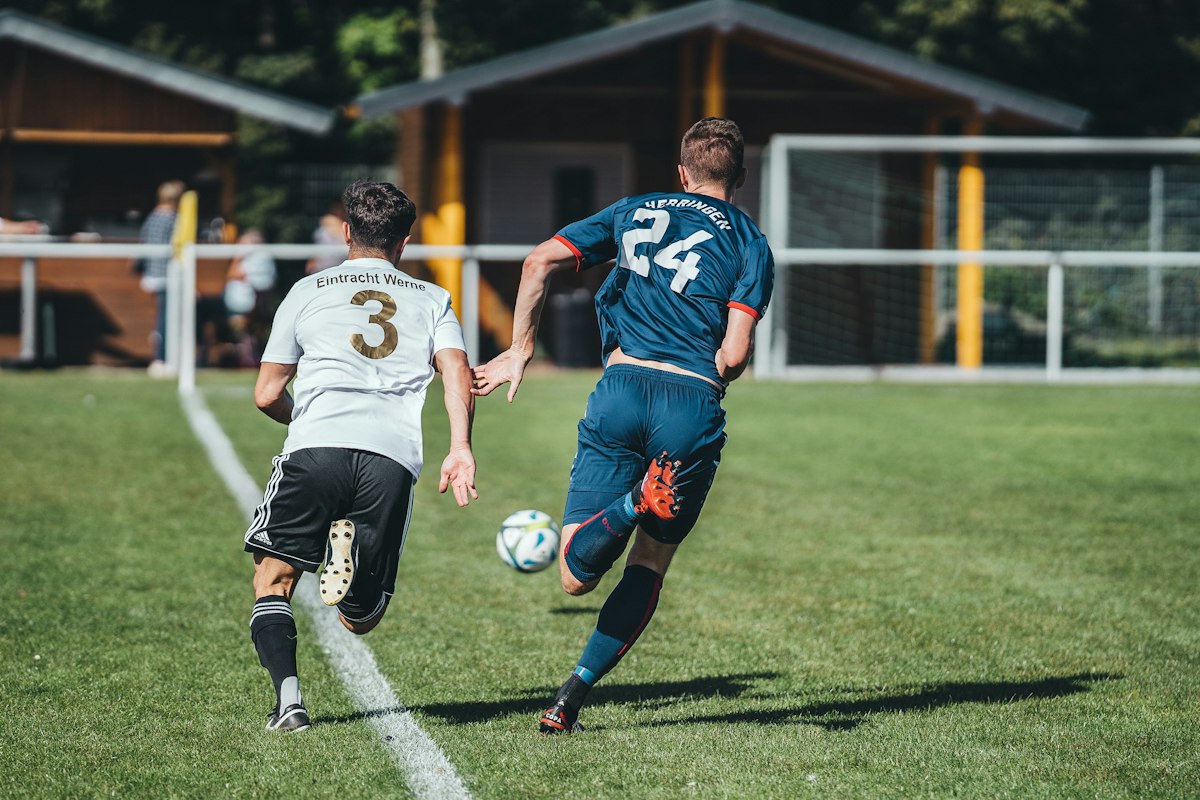
To learn how to play football, start with the structure of the game before concentrating on advanced tricks. Association football is played by two teams trying to move the ball into the opponent’s goal. Outfield players may use their feet, legs, torso, and head, but only the goalkeeper can deliberately handle the ball inside the penalty area. The team that scores more goals wins.
Football rules and match structure
A standard match has two 45-minute halves, although youth, amateur, and local competitions may use shorter periods. The referee controls the match, applies the Laws of the Game, and may add stoppage time for injuries, substitutions, and other delays.
Play begins with a kick-off from the centre. The ball is out of play only when it completely crosses a touchline or goal line, or when the referee stops the match. A goal counts when the entire ball crosses the goal line between the posts and beneath the crossbar, provided no attacking offence occurred first.
The offside rule is one of the first concepts new players need to understand. A player is in an offside position if, at the moment a teammate plays the ball, they are in the opponents’ half and nearer to the goal line than both the ball and the second-last opponent. Position alone is not an offence; the player must become involved in active play. There is no offside directly from a goal kick, throw-in, or corner kick.
Common restarts include throw-ins, goal kicks, corner kicks, free kicks, and penalty kicks. A foul can result in a direct free kick, indirect free kick, or penalty. Serious or repeated misconduct may lead to a yellow or red card. Learning these restarts helps a beginner understand why play stops and how possession changes.
The basic football skills to practise first
First touch and ball control
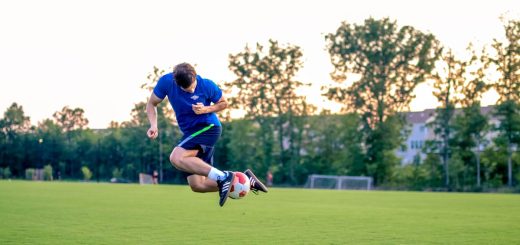
Your first touch determines what you can do next. Receive the ball with the inside of the foot, sole, thigh, chest, or another legal surface, cushioning it rather than allowing it to bounce far away. Try to move the ball into space away from pressure, not simply stop it directly under your body.
A useful solo football drill is to pass against a wall and control the return with alternating feet. Begin with short passes, then vary the angle and speed. Keep your body slightly open so you can see the ball and more of the field at the same time.
Passing and receiving
For accurate short passing, place the non-kicking foot beside the ball, point its toes toward the target, and strike through the centre with the inside of the foot. The strength of the pass should match the distance and the receiver’s available time. A pass to a teammate’s front foot may help them protect the ball; a pass into space can allow them to run onto it.
Before receiving, scan over both shoulders. Knowing where pressure and support are located makes the next action faster. Players who look only at the ball often take an extra touch and lose possession.
Dribbling and turning
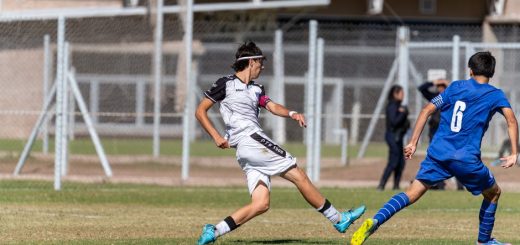
Dribbling is controlled movement with the ball, not a sequence of tricks. Use small touches in crowded areas and longer touches when running into open space. Change speed after a feint, protect the ball with your body, and keep it on the foot farthest from the defender.
Practise inside-foot cuts, outside-foot cuts, drag-backs, and changes of direction. A successful dribble is usually valuable because it beats pressure, creates a passing lane, or carries the team forward; attempting a trick without a clear purpose can expose your team to a counterattack.
Shooting
For a controlled shot, plant the non-kicking foot beside the ball and keep your head steady over it. The laces can produce power, while the inside of the foot offers greater placement. Aim for a specific area of the goal rather than simply kicking as hard as possible. Shooting practice should include finishes from different angles, shots after a first touch, and weaker-foot attempts.
Football positions and what each player does
Positions describe a player’s main responsibilities, but modern football requires constant movement and cooperation. A player may defend, support, or attack outside their starting area.
- Goalkeeper: protects the goal, communicates with defenders, claims or parries crosses, and starts attacks with throws or kicks. Handling is restricted outside the penalty area.
- Centre-back: defends the central area, tracks attackers, contests aerial balls, and often begins build-up play.
- Full-back or wing-back: defends wide areas and may support attacks along the flank. The role demands recovery speed and awareness of space behind the line.
- Defensive midfielder: screens the defence, receives the ball under pressure, and helps control transitions after possession changes.
- Central midfielder: links defence and attack through positioning, passing, pressing, and movement away from the ball.
- Winger: stretches the opposition on the outside, carries the ball, crosses, or moves inside to shoot and combine.
- Striker: occupies defenders, attacks space, combines with teammates, and finishes chances. A striker’s work without the ball is also part of the role.
Beginners often benefit from trying several positions. This develops a wider understanding of passing angles, defensive pressure, and the time teammates need to make decisions.
How to make better decisions during a match
Football is not only a technical game. Players must decide quickly based on space, pressure, teammates, and the position of the opponents.
Use a simple priority order when you receive the ball: look forward for a safe attacking option, check for a teammate who can progress play, and retain possession if neither option is available. A forward pass is not automatically the best pass. Losing the ball in a dangerous central area can be worse than making a secure pass backward.
After passing, move again. You can support behind the ball, run beyond the receiver, or move sideways to create a new angle. Standing still makes it easier for defenders to mark both the player and the passing lane.
When defending, delay the attacker before attempting a tackle. Stay balanced, show the opponent away from the most dangerous route, and watch the ball rather than reacting to every body movement. Teammates should cover behind the first defender and remain compact instead of chasing individually.
A practical football training plan
A beginner can train three or four times per week, adjusting the workload to age, fitness, and previous experience. Quality and regularity matter more than exhausting sessions.
- Technical session: spend 15–20 minutes on wall passing, first touch, dribbling, and both-foot control.
- Movement session: practise short accelerations, changes of direction, balance, and deceleration. Warm up first and keep high-speed work brief.
- Small-sided game: play three-a-side, five-a-side, or another reduced format. Smaller games create frequent touches and decisions.
- Match observation: watch a match while focusing on one position. Track how that player moves before receiving the ball and what happens immediately after possession is lost.
Include rest days and stop if pain is sharp, worsening, or associated with swelling. Suitable footwear and a safe playing surface reduce avoidable injury risk. A qualified coach can correct technique more reliably than copying a video without feedback.
Common mistakes when learning football
Watching the ball constantly: scanning before and after receiving helps you see pressure and passing options.
Using only the stronger foot: basic control and passing with the weaker foot make your options less predictable.
Chasing the ball: disciplined positioning protects space and prevents teammates from having to cover several areas at once.
Trying difficult skills too early: reliable first touch, passing, and movement produce more value than elaborate tricks in most matches.
Ignoring the defensive phase: every outfield player has a role after losing possession, such as pressing, covering, tracking a runner, or recovering into shape.
Frequently asked questions about playing football
How long does it take to learn football?
The basic rules and movements can be learned quickly, but reliable execution under pressure takes regular practice and match experience. Progress depends on frequency of training, coaching, physical development, and the quality of decisions during games.
Can I learn how to play football without a team?
Solo practice can improve ball control, passing technique, dribbling, and fitness. It cannot fully reproduce defensive pressure, teamwork, or decisions involving moving opponents. Combine individual drills with small-sided games when possible.
What should a beginner learn first in football?
Start with the main rules, first touch, short passing, receiving with both feet, basic movement into space, and defensive positioning. These foundations apply across most formations and positions.
Is football the same as soccer?
In most countries, “football” means association football, the game described here. In some countries, especially the United States and Canada, “soccer” is used to distinguish it from gridiron football.