Why Do They Sweep in Curling? The Science Behind the Broom
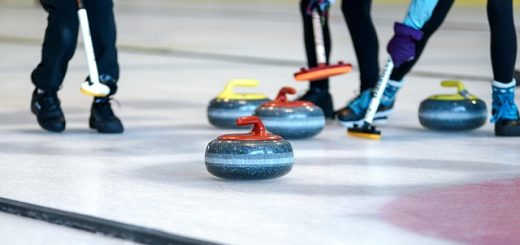
Players sweep in curling to change how the stone moves across the ice. Brushing the surface in front of the stone briefly reduces friction, allowing it to travel farther and stay closer to its intended line.
Sweeping does not push the stone forward or steer it directly. Instead, it changes the ice conditions beneath the stone. The skip, who directs the shot from the far end, watches the stone and tells the sweepers when to brush, stop, or change their effort.
How sweeping changes a curling stone’s path
A curling sheet is covered with tiny droplets of water that freeze into raised bumps called pebble. The stone slides over these bumps rather than across a perfectly flat surface. As it travels, friction gradually slows the stone and contributes to its sideways curl.
The broom head warms and smooths a very small area of the pebble in front of the stone. This creates a temporary low-friction path. The result is usually a stone that travels farther and curls less than it would without sweeping.
- More distance: Sweeping reduces resistance, so the stone can reach the house when it might otherwise stop short.
- Less curl: The stone generally holds a straighter line while the sweepers are brushing.
- Small line adjustments: Skilled sweepers can influence the final position by deciding where and how intensely to sweep.
This is why the question “does sweeping make a curling stone go faster?” has a qualified answer. Sweeping does not increase the stone’s initial speed. It helps the stone retain speed for longer by limiting friction.
Why sweepers sometimes stop or sweep on one side
The decision to sweep depends on the shot’s weight, the ice conditions, and the stone’s line. Sweepers may brush immediately after release if the stone is likely to fall short. They may also sweep later in the shot to protect the line or prevent the stone from curling too far.
Communication is essential. The thrower watches the stone’s release, while the skip judges its progress from the other end. Calls such as “sweep,” “hurry,” or “whoa” tell the sweepers how much effort is needed. Their response must be quick because the stone may cover the sheet in only a few seconds.
In some situations, sweepers brush more on one side of the stone’s path. This can slightly affect the amount of curl, but it is not the same as steering a wheel. The main effect remains friction reduction, and the result depends on the ice, the stone’s rotation, and the timing of the sweeping.
Do curlers sweep every shot?
No. A stone thrown with enough weight may not need sweeping, and brushing at the wrong time could cause it to travel too far. Sweepers also avoid unnecessary contact when a stone is already following the correct path and has enough momentum.
Sweeping is especially common on draw shots, where the stone must stop in a precise location, and on takeouts, where players remove another stone from play. On a takeout, sweepers may be asked to keep the thrown stone straight so it reaches its target instead of curling around it.
The amount of sweeping can change during a match. Ice temperature, humidity, pebble pattern, and the condition of the stones all influence how far a shot travels. Teams continually read those conditions rather than relying on one fixed amount of brushing.
What the curling broom is really doing
The broom is not mainly used to clear snow from the sheet. Its important job is to alter the thin layer of ice directly ahead of the moving stone. Modern curling brooms are designed to create consistent contact with the surface while allowing players to apply pressure and brush rapidly.
That small change in friction can determine whether a stone reaches the four-foot circle, slides behind cover, or stops in front of the house. Sweeping therefore combines timing, ice reading, physical effort, and communication. It is a tactical part of curling, not simply a way to make the sport look active.
Frequently asked questions about sweeping in curling
Does sweeping make a curling stone curl more?
Usually, no. Sweeping generally makes the stone curl less while it is being brushed because it reduces friction. Once sweeping stops, the stone can begin curling more noticeably as it slows.
Can sweepers change the direction of the stone?
They can influence the final line, mainly by reducing friction and controlling how long the stone continues on its current path. They cannot directly turn the stone like a steering mechanism.
Why do two players sweep one stone?
Two sweepers can cover more of the path and apply greater, more consistent brushing force. The team can also maintain the required intensity for longer than one player could.