How Hard Is Curling? The Physical, Technical and Mental Demands
How hard is curling? The answer depends on which part of the sport you mean. A beginner can learn the basic delivery and sweeping in a short session, but consistent curling performance takes much longer. Players must control a heavy stone while sliding on one foot, judge a changing ice surface and make accurate tactical decisions under pressure.
Curling is usually less demanding in continuous running than sports such as football or basketball. That does not make it effortless. The sport combines balance, lower-body strength, coordination, precision, communication and repeated short bursts of intense work. Its difficulty also changes with the role: a lead may sweep frequently, while a skip spends more time reading the house and directing play.
What makes curling difficult for beginners?
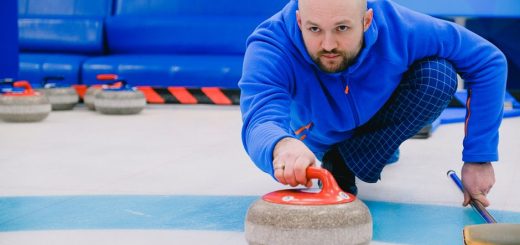
The first challenge is staying stable on the ice. A curling delivery involves pushing from a hack, extending into a controlled slide and releasing the stone without losing balance. Beginners often find that the sliding foot, delivery arm and body position must work together in an unfamiliar way. Small changes in posture can alter the stone’s direction and speed.
Stone control is another major obstacle. A curling stone weighs around 20 kilograms, but players do not simply throw it toward the target. They release it with a carefully measured amount of rotation and speed. The stone must travel far enough to reach the house while stopping in a useful position. A release that is slightly too fast, too slow or off line can change the result of an end.
The ice adds uncertainty. Curling sheets are prepared with a textured surface, often called pebble, and the stone’s path is affected by speed, rotation, temperature and the condition of the playing surface. The amount a stone curls is not always identical from one sheet or session to another. Players therefore need to observe the ice and adjust rather than rely on one fixed motion.
How physically demanding is curling?
Curling uses more physical effort than its slow pace suggests. A player may repeatedly squat, slide, rise, carry stones and sweep. Sweeping places particular demands on the legs, hips, shoulders and core. It requires players to apply pressure to the ice while moving quickly beside a stone, often during a shot that lasts only several seconds.
A curling match can also be tiring because effort is repeated over many ends. The intensity is intermittent rather than continuous: a player may wait, move into position, sweep hard for a short period and then recover. This pattern rewards power and conditioning, but it also requires concentration late in the game when physical fatigue can affect communication and shot execution.
Balance and mobility are especially relevant. A player with limited flexibility may find the low delivery position uncomfortable, while weak leg stability can make the slide inconsistent. These limitations do not automatically prevent participation, because technique, adapted equipment and appropriate coaching can change how a player delivers or sweeps. Physical requirements vary across recreational, club and elite levels.
Why sweeping is harder than it looks
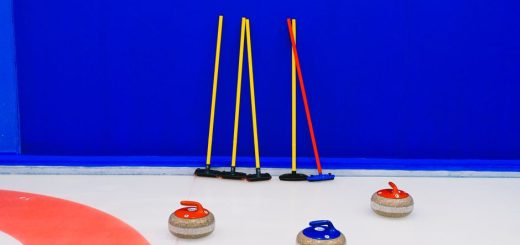
Sweeping is not just brushing the ice. The goal is to influence the stone’s speed and, in some situations, its final line. Effective sweeping depends on pressure, brush speed, body position and timing. Sweepers must also listen to the skip’s instructions and judge whether the stone is running too short, too wide or too straight.
Two sweepers may need to work together while avoiding collisions and keeping their movements coordinated. They must decide quickly whether to sweep, stop sweeping or change effort. This is why curling sweeping technique involves both conditioning and judgment. A player can be physically strong but still sweep inefficiently if the brush is not positioned correctly or the timing is poor.
Is curling technically or mentally difficult?
The technical difficulty of curling comes from the relationship between release, speed, rotation and ice reading. Players must deliver different types of shots, including guards, draws, takeouts and freezes. Each shot has a different purpose and margin for error. A draw needs controlled weight and precise line, while a takeout usually requires greater speed and accurate contact with another stone.
The mental side becomes more demanding as competition improves. Teams must evaluate the position of every stone, anticipate possible responses and choose a shot that fits the score and the remaining ends. A technically excellent shot may still be a poor decision if it gives the opponent an easy scoring opportunity. Communication is central because the skip calls the strategy while the deliverer and sweepers judge the stone’s progress.
Pressure also affects execution. A player can make a delivery reliably in practice and struggle with a final shot in a close game. Curling therefore tests routine, concentration and the ability to adjust after an error. The sport’s apparent lack of speed can be misleading: decisions are deliberate, but the delivery and sweeping window is brief.
How long does it take to learn curling?
Most newcomers can understand the basic rules and participate in a beginner curling session quickly. Learning to slide safely, release a stone and sweep with reasonable control may take several sessions. Becoming consistent requires more practice because players must reproduce the same delivery while accounting for different ice conditions.
The time needed depends on previous skating or sliding experience, mobility, coaching and how often someone plays. A recreational player can enjoy curling without mastering advanced strategy. Competitive curling demands much more: reliable shot execution, detailed knowledge of ice behaviour, physical preparation and experience reading game situations.
Indoor curling facilities commonly teach safety before technique. New players should follow instructions about footwear, balance aids, carrying stones and entering or leaving the sheet. Falls are possible, especially during the first attempts at sliding, so controlled movement is more valuable than trying to generate speed immediately.
Is curling harder than it looks?
Yes, but its difficulty is different from that of many mainstream team sports. Curling generally has less sustained running and fewer high-speed collisions, yet it demands unusual precision and balance. The sport can be physically accessible at a recreational level while remaining technically and tactically complex at an advanced level.
The common misconception is that players only need to slide a stone toward a target. In reality, they must manage release mechanics, ice conditions, sweeping, strategy and teamwork at the same time. Another misconception is that curling is easy because players take turns. The waiting periods are part of the sport’s rhythm, but they do not remove the need for readiness and concentration.
Frequently asked questions about curling difficulty
Is curling hard on the knees?
The low delivery position and repeated sweeping can place stress on the knees, hips and lower back, particularly when technique or mobility is limited. Proper instruction, warm-up and gradual progression can reduce unnecessary strain. Anyone with a current injury should seek appropriate medical advice before playing.
Do you need to be strong to play curling?
High-level strength can help with sweeping and stability, but beginners do not need exceptional strength. Balance, coordination and learning a controlled delivery are more useful starting points. Physical demands increase with longer games, faster sweeping and competitive play.
Is curling difficult to understand?
The basic scoring system is relatively straightforward: stones closer to the centre of the house can score, and only one team scores in an end. Strategy becomes more complicated because teams choose between protecting a lead, creating scoring chances and limiting the opponent’s options.
Can older adults learn curling?
Many older adults play recreational curling, although the sliding position and ice safety require appropriate instruction. Some players use a stick delivery or other adaptations rather than sliding. The suitable approach depends on mobility, balance, local club rules and individual health.