Basketball Terminologies: A Clear Glossary of Common Terms
Basketball has its own vocabulary for scoring plays, player roles, violations, tactics, and statistics. Understanding these terms makes it easier to follow live games, read box scores, and discuss what happens on the court. Some wording varies between the NBA, FIBA competitions, college basketball, and local leagues, but the basic language is widely shared.
Basic basketball terms and court actions
- Assist
- A pass that directly leads to a teammate scoring. The exact requirements for an assist can vary slightly between competitions and statistical providers.
- Dribble
- Bouncing the ball with one hand while moving or controlling it. A player may not run while holding the ball without dribbling.
- Pivot
- Moving around one fixed foot while keeping that foot in contact with the floor. The other foot may step in different directions.
- Rebound
- Gaining possession after a missed field goal or free throw. An offensive rebound is collected by the attacking team, while a defensive rebound goes to the defending team.
- Steal
- Taking the ball from an opponent or causing a turnover through a defensive play.
- Turnover
- A loss of possession caused by an error, violation, bad pass, offensive foul, or successful defensive pressure.
- Block
- A legal defensive action that stops or changes an opponent’s shot attempt.
- Box out
- Using body position to keep an opponent away from the basket and improve the chance of securing a rebound.
Scoring terminology in basketball
A field goal is any successful shot from the floor. A shot inside the three-point line is worth two points, while a successful shot from beyond the line is worth three points. The exact three-point distance differs between leagues and competition levels.
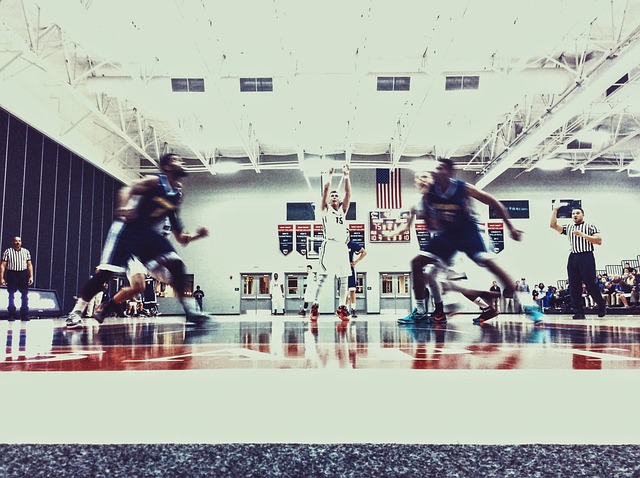
A free throw is an uncontested shot from the free-throw line, usually awarded after certain defensive fouls. Each successful free throw is worth one point. A layup is a close-range shot taken near the basket, often using the backboard. A putback is a quick score after an offensive rebound.
A dunk occurs when a player puts the ball directly through the rim with one or both hands. A tip-in is a close shot redirected into the basket, commonly during a rebound situation. A bank shot uses the backboard, while a hook shot is released with a sweeping one-handed motion.
Violations and fouls
Violations usually result in a change of possession without a personal foul being charged. Common examples include:
- Traveling: Moving illegally with the ball without completing a legal dribble.
- Double dribble: Starting a second dribble after ending the first, or dribbling with both hands at the same time.
- Carrying: Placing the hand underneath or significantly to the side of the ball during a dribble.
- Out of bounds: Touching the boundary line or floor outside the court while controlling or touching the ball.
- Backcourt violation: Causing the ball to return to the backcourt after the offensive team has established control in the frontcourt.
- Three-second violation: Remaining in the opposing team’s restricted lane area for too long while the team controls the ball in the frontcourt.
- Shot-clock violation: Failing to attempt a shot that reaches the rim before the possession clock expires.
A personal foul involves illegal physical contact with an opponent. A shooting foul occurs during a shot attempt and may result in free throws. An offensive foul is committed by the attacking team, such as illegal contact by a player setting a screen. A technical foul is generally linked to unsporting conduct or a non-contact rule violation, while a flagrant or unsportsmanlike foul involves more serious or unnecessary contact, depending on the rule set.
Basketball positions and player roles
The traditional five basketball positions are point guard, shooting guard, small forward, power forward, and center. Modern teams often use flexible roles rather than assigning every player to one fixed position.
- Point guard: Usually organizes the offense, brings the ball up the court, and creates chances for teammates.
- Shooting guard: Often provides perimeter scoring, movement without the ball, and secondary ball handling.
- Small forward: A versatile player who may score, defend several positions, rebound, and handle the ball.
- Power forward: Traditionally plays near the basket, but many modern power forwards also shoot from outside.
- Center: Commonly protects the rim, contests shots, sets screens, and finishes close to the basket.
A point forward is a forward who handles playmaking duties. A stretch four is a power forward who can reliably shoot from the perimeter. A three-and-D player is valued for three-point shooting and perimeter defense. A sixth man is a strong reserve who often enters early and contributes like a starter.
Offensive basketball terminology
A screen, also called a pick, is a legal attempt to obstruct a defender so a teammate can move into space. A pick-and-roll happens when the screener turns toward the basket after setting a pick. In a pick-and-pop, the screener moves away from the basket to receive a pass for a jump shot.
A give-and-go is a pass followed by a cut toward the basket to receive the ball back. A backdoor cut sends a player behind a defender toward the basket. A crossover changes the ball from one hand to the other to beat a defender, while a hesitation move uses a brief change of speed to create separation.
A fast break is a quick attack before the defense is organized. A transition offense describes the broader attack immediately after a change of possession. Half-court offense refers to organized play against a set defense. A spacing concept keeps offensive players positioned to create driving lanes and passing angles.
Defensive terms and team tactics
Man-to-man defense assigns defenders to specific opponents. In a zone defense, players protect areas of the court rather than following one player everywhere. A full-court press applies defensive pressure across the entire court, while a half-court press begins closer to the basket being defended.
Help defense means supporting a teammate who has been beaten or is under pressure. Closeout describes the controlled movement toward a shooter, with the defender trying to contest the shot without being beaten off the dribble. Switching occurs when two defenders exchange assignments after a screen.
A double team sends two defenders toward the player with the ball. A trap is a coordinated double team that attempts to restrict passing and dribbling options. Rim protection covers defensive actions that discourage or block shots near the basket.
Basketball statistics and game language
A box score commonly lists points, rebounds, assists, steals, blocks, turnovers, and personal fouls. A player’s field-goal percentage measures made field goals compared with attempts. Three-point percentage and free-throw percentage use the same basic principle for those shot types.
A double-double means reaching double figures in two statistical categories, such as points and rebounds. A triple-double means reaching double figures in three categories. Plus-minus records the team’s point difference while a player is on the court. Usage rate, effective field-goal percentage, and player efficiency metrics are advanced statistics that require league-specific formulas and should be interpreted alongside playing time and role.
Possession describes a team’s control of the ball. Points in the paint are scored in the lane area near the basket. Second-chance points come after an offensive rebound, while bench points are scored by players who did not start the game.
Common questions about basketball terms
What does “and-one” mean in basketball?
“And-one” describes a made field goal accompanied by a foul on the shooter. The player receives an additional free-throw attempt, creating the possibility of scoring three points on a two-point shot or four points on a three-point shot.
What is a buzzer-beater?
A buzzer-beater is a shot made as time expires at the end of a quarter, half, regulation game, or overtime period. Officials must determine whether the ball left the shooter’s hand before the clock reached zero.
What is a clutch shot?
A clutch shot is a successful or important attempt made during a decisive moment, usually late in a close game. “Clutch” is a descriptive term rather than a standard statistical category with one universal definition.
What is the difference between a foul and a violation?
A foul generally involves illegal physical contact or unsporting behavior and may be recorded against a player or team. A violation is a breach of another playing rule, such as traveling or stepping out of bounds, and normally leads to a turnover without a personal foul.