Who Is the Best Wrestler? Comparing the Greatest Champions
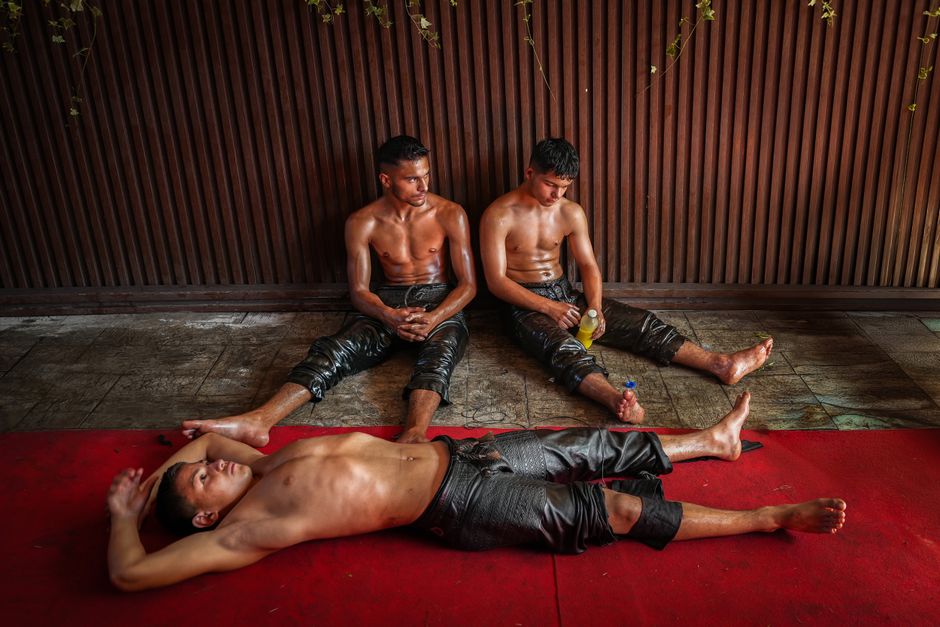
The answer to “who is the best wrestler?” depends on what kind of wrestling you mean. Olympic wrestling rewards control, takedowns and defensive skill, while professional wrestling is judged through storytelling, character work and influence. Even within Olympic competition, freestyle, Greco-Roman and women’s freestyle have different demands.
A fair comparison should therefore consider championship results, quality of opposition, longevity, technical ability and performance under pressure. No single statistic settles the debate, but several athletes have built exceptionally strong cases across the sport’s history.
What makes a wrestler the best?
Medals and titles are the clearest starting point, especially at the Olympic Games and World Championships. However, a wrestler’s record needs context. A dominant champion in one weight class may have faced a different competitive environment from an athlete competing in another era.
- Major titles: Olympic gold medals and world championships carry the most weight in amateur wrestling.
- Longevity: Remaining at the top for many seasons shows that success was not based on one short peak.
- Technical range: The best wrestlers can attack, defend, scramble and score from difficult positions.
- Quality of competition: Victories against established champions strengthen a wrestler’s claim.
- Consistency under pressure: Olympic finals, world championships and close matches reveal competitive character.
Weight class also matters. Comparing athletes directly across divisions is difficult because strength, speed, reach and style change considerably. A lighter wrestler may rely on movement and rapid attacks, while a heavyweight may win through position, balance and physical control.
Some of the greatest Olympic and amateur wrestlers
Mijaín López is one of the strongest candidates for the greatest Greco-Roman wrestler ever. The Cuban heavyweight became known for exceptional positional control, balance and patience. His Olympic achievements placed him in a historic category, particularly because he maintained elite form across multiple Games.
Alexander Karelin is another legendary Greco-Roman champion. The Russian heavyweight combined unusual power with refined technique and was especially dangerous from the upper body. His long unbeaten run and dominance over elite opponents made him a standard by which heavyweight wrestlers are often measured.
In freestyle, Buvaisar Saitiev is widely admired for his fluid movement, counterattacks and tactical intelligence. His wrestling was less about forcing one repeated action and more about creating openings through timing and position.
Jordan Burroughs built a major legacy through explosive double-leg attacks, speed and an ability to score in high-pressure exchanges. His success at the Olympic and world level made him one of the defining freestyle wrestlers of his generation.
Women’s wrestling has its own list of all-time greats. Saori Yoshida and Kaori Icho are particularly prominent. Yoshida was celebrated for her attacking style and remarkable international record, while Icho combined technical precision with sustained success over many years.
Best wrestler by style
There is no universal greatest wrestler because the three Olympic styles reward different skills.
| Style | What defines it | Names often included in all-time debates |
|---|---|---|
| Freestyle | Attacks to the legs are allowed, along with fast scrambles and exposure points. | Buvaisar Saitiev, Jordan Burroughs and other Olympic and world champions |
| Greco-Roman | Attacks below the waist are not allowed, so upper-body throws, lifts and position are central. | Mijaín López and Alexander Karelin |
| Women’s freestyle | Women compete under freestyle rules, with elite wrestlers combining speed, technique and tactical control. | Saori Yoshida and Kaori Icho |
This is why “best wrestler in the world” searches can produce different answers. Someone looking for the greatest Olympic wrestler may choose a multiple-time champion, while a fan of pure technique may prefer an athlete whose movement and tactical decisions changed how the style was wrestled.
Olympic wrestler or professional wrestler?
The word “wrestler” is also commonly used for performers in professional wrestling. That is a different comparison. Professional wrestlers are evaluated through ring psychology, charisma, microphone skills, character development, match quality and influence on the audience. Names such as Hulk Hogan, Ric Flair, The Undertaker, Bret Hart and The Rock are often discussed in that context, but their achievements should not be compared directly with Olympic medals.
Professional wrestling is scripted entertainment, although the physical training and injury risks are real. Olympic wrestling is a competitive combat sport in which the result is decided on the mat. Clarifying this distinction makes any answer about the best wrestler more meaningful.
How to decide your own answer
Start by choosing the category: Olympic wrestling, freestyle, Greco-Roman, women’s wrestling or professional wrestling. Then compare athletes within the same category using major titles, length of dominance, opponents, technical quality and influence.
If the question is about overall Olympic achievement, Mijaín López, Alexander Karelin, Saori Yoshida, Kaori Icho, Buvaisar Saitiev and Jordan Burroughs are logical names to study. The final choice remains subjective because different fans value medal totals, unbeaten records, technical creativity or cultural impact differently.