
How to Do the Splits: A Safe Beginner Routine for Better Flexibility
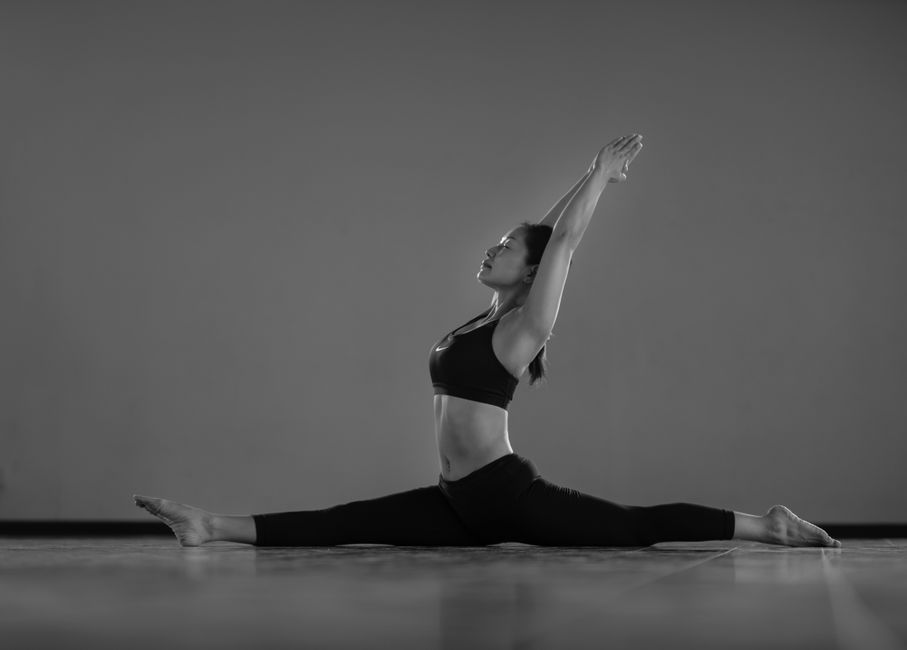
The first few centimetres are often the most frustrating when learning how to do the splits. Muscles may feel tight, one side may move differently from the other, and forcing the position can create an injury rather than improve flexibility. A safer approach combines regular practice, controlled stretches, and enough patience for your range of motion to develop.
What to Know Before Practising the Splits
The splits are not one single position. A front split places one leg forward and the other behind you, while a side split moves both legs out to the sides. They require a combination of hip mobility, hamstring flexibility, inner-thigh flexibility, and strength near the end of your available range.
Your starting position depends on anatomy, training history, previous injuries, and how consistently you practise. Some people notice progress within weeks; for others, learning the front splits takes several months or longer. The aim should be controlled improvement, not reaching the floor as quickly as possible.
Stop if you feel sharp pain, a sudden pulling sensation, numbness, tingling, or pain in a joint. A strong stretch sensation is different from pain. Anyone recovering from a hip, knee, hamstring, groin, or lower-back injury should ask a qualified healthcare professional before beginning a splits flexibility routine.
How to Warm Up for Splits Training
Cold muscles are less prepared for deep stretching. Start with five to ten minutes of easy movement that raises your body temperature, such as brisk walking, cycling, light jogging, or dancing. Follow this with controlled mobility rather than immediately holding a deep stretch.
- Perform slow leg swings while holding a stable support.
- Move through gentle walking lunges without forcing the stride.
- Use controlled hip circles and bodyweight squats.
- Practise several slow leg extensions before attempting a deeper position.
Dynamic movements should feel smooth. They are preparation, not a test of how high or far your leg can travel.
A Beginner Front-Splits Routine
Practise this sequence two to four times per week, leaving at least a day between harder sessions. Breathe normally and keep the movements controlled.
1. Half-kneeling hip-flexor stretch
Place one knee on a padded surface and the opposite foot in front. Keep your torso upright, gently tighten your abdomen, and move your hips forward until you feel a stretch at the front of the kneeling hip. Do not arch your lower back. Hold for 20 to 30 seconds on each side and repeat twice.
2. Low lunge with hamstring shift
From the low lunge, shift your hips back and straighten the front leg as far as comfortable. Keep the front toes pointing upward and hinge from the hips rather than rounding aggressively through the spine. Move slowly between the lunge and hamstring position for six to eight repetitions, then hold the final position for 20 seconds.
3. Supported front-split position
Place yoga blocks, books, or sturdy cushions beneath your hands or hips. Slide the front and back legs apart only until you feel a manageable stretch. Keep both kneecaps facing upward and avoid twisting to one side. Hold for 15 to 30 seconds, rest, and repeat two or three times.
Support is useful because it lets you practise alignment without collapsing into the deepest position available. Over time, reduce the height of the support gradually rather than forcing your pelvis toward the floor.
How to Work Toward a Side Split
Side splits place greater demand on the inner thighs and hips. Begin with a wide stance that allows you to keep your feet stable and your spine comfortable. Slowly shift your weight from side to side, then lower your hips a little while keeping your knees tracking in the same direction as your toes.
For a deeper stretch, sit on the floor and open your legs to a comfortable width. Keep your knees and toes facing upward, lengthen through the spine, and lean forward only slightly. Hold for 20 to 30 seconds, repeat twice, and stop before your inner thighs produce sharp or pinching pain.
Do not bounce in a side split or push down on your knees. A wall, chair, or pair of blocks can provide balance and help you control the depth.
Strength Matters as Much as Stretching
Flexibility alone does not make a split comfortable or stable. Light strengthening helps you control the range you are trying to gain. Add two or three sets of exercises such as glute bridges, split squats, slow leg lifts, and side-lying hip raises to your weekly training.
Use a shallow range at first. The goal is to keep the movement steady and pain-free, especially near the end of the motion. Active flexibility exercises, such as lifting the leg under control rather than pulling it into position, can also help your body feel more secure in a wider range.
Common Mistakes That Slow Progress
- Stretching aggressively: Forcing the body into a split can irritate muscles, tendons, or joints.
- Skipping the warm-up: Deep static stretching is better tolerated after light movement.
- Training only one side: Work both legs, even if one side feels much closer to a front split.
- Ignoring alignment: A twisted pelvis can make the position look deeper without developing the intended flexibility.
- Practising intensely every day: Muscles and connective tissues need time to recover.
- Comparing progress with other people: Hip structure and previous activity can make starting points very different.
How Often Should You Practise?
Short, consistent sessions are usually more practical than occasional, exhausting stretches. Begin with 15 to 25 minutes, including a warm-up, mobility work, stretching, and a small amount of strength training. Keep a simple record of how the position feels, rather than measuring progress only by the distance from the floor.
If you feel increasingly sore from one session to the next, reduce the intensity or take extra recovery time. Progress may appear as better alignment, less discomfort, or greater control before it appears as a visibly deeper split.
Frequently Asked Questions About Learning the Splits
Can anyone learn how to do the splits?
Many people can improve their split position substantially, but a full split is not guaranteed for everyone. Individual anatomy, joint structure, injury history, age, and training consistency all affect the final range.
How long does it take to learn the splits?
There is no reliable universal timetable. Someone with an existing flexibility background may progress quickly, while a beginner may need months of steady practice. A gradual routine is safer than trying to accelerate the process.
Should I stretch every day to get the splits?
Gentle mobility can be done frequently, but demanding split stretches do not need to be performed every day. Two to four focused sessions per week give many beginners enough practice while allowing recovery.
Why am I feeling pain while practising?
Sharp, burning, pinching, joint, or nerve-like sensations are warning signs rather than evidence of effective stretching. Stop the exercise and seek professional advice if the pain persists or follows an injury.