
Kicking in Football: Techniques, Rules, and Common Mistakes
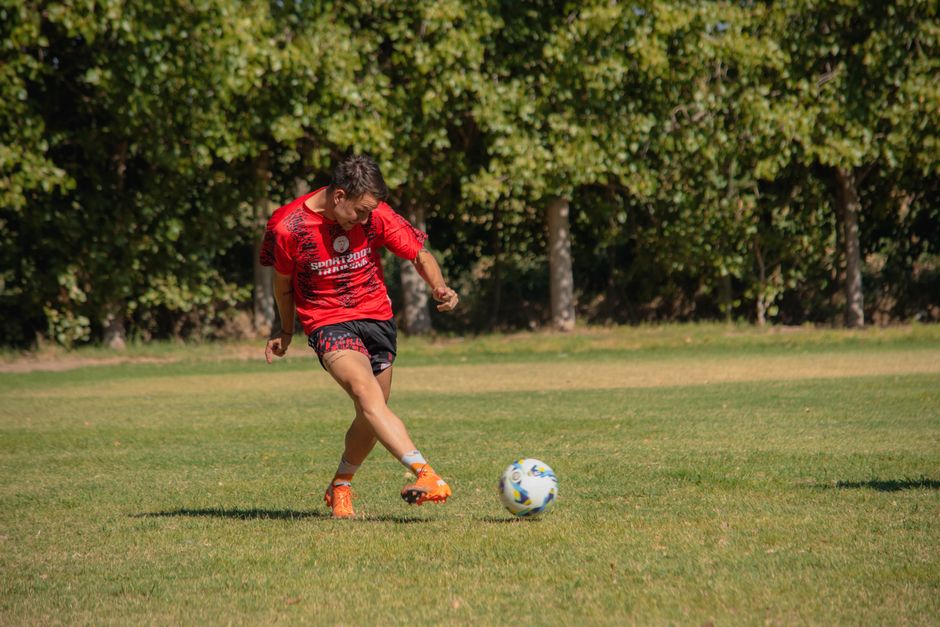
Kicking in football is the main way players pass, shoot, clear the ball, and restart play. The result depends on more than power: the angle of the approach, the part of the foot used, the position of the non-kicking foot, and the point where the ball is struck all affect accuracy and movement.
What kicking means in football
In association football, kicking means striking the ball with the foot to move it toward a teammate, the goal, or a safer area of the pitch. Players use several football kicking techniques depending on the situation.
- Inside-foot pass: The broad surface of the foot gives better control and is usually the safest choice for short and medium passes.
- Laces kick: The top of the foot generates pace for powerful shots, long passes, and clearances.
- Instep pass: Striking with the instep combines control and distance, making it useful for driven passes.
- Outside-foot kick: The outside of the foot can create a curved or disguised pass.
- Toe poke: A quick touch with the toe can surprise a goalkeeper or help a player shoot when there is little space.
- Chip or lofted kick: A player strikes under the ball to lift it over an opponent, a defensive line, or an advancing goalkeeper.
The best technique is determined by the aim. A short pass normally needs precision rather than maximum force, while a shot from distance may require a firm laces kick and a stable body position.
How to kick a football accurately and with power
Good football kicking technique starts before contact with the ball. Take a controlled approach and place the non-kicking foot beside the ball, pointing roughly toward the intended target. Keep the head steady, watch the contact point, and finish the motion in the direction of the pass or shot.
For an accurate pass
Use the inside of the foot and keep the ankle firm. Strike through the middle of the ball for a flat pass. A shorter backswing improves control, while a follow-through toward the teammate helps keep the ball on line. Open the hips slightly if the pass needs to travel across the body.
For a powerful shot
Approach at a slight angle, plant the supporting foot beside the ball, and lock the ankle. Strike through the centre or slightly below the centre with the laces. Leaning too far back often sends the ball over the crossbar; leaning slightly over it helps keep a driven shot lower.
For a curling kick
Strike the ball off-centre with the inside or outside of the foot. Contact on one side creates spin, which can bend the ball through the air. This technique is useful for corners, free kicks, crosses, and shots around defenders, but it requires more control than a straight kick.
When different kicks are used in a match
A pass is used to retain possession or move the ball into space. A clearance is usually a defensive kick made under pressure, often toward the touchline or a teammate rather than directly through the middle. A cross sends the ball from a wide area toward attackers in or near the penalty area.
Set pieces create specific kicking situations. A free kick is awarded after certain fouls, and it may be taken quickly or delivered toward the penalty area. A penalty kick is taken from the penalty mark after a direct-free-kick offence by the defending team inside its own penalty area. A corner kick is awarded when the defending team last touches the ball before it crosses its own goal line without a goal being scored. A goal kick is awarded when the attacking team last touches the ball before it crosses the goal line and the ball does not enter the goal.
Goalkeepers also use kicking in football to restart play with goal kicks, clearances, and long distributions. Their choice may be a short pass to a defender or a longer kick toward the midfield or attacking third.
Football kicking rules and dangerous challenges
Kicking the ball is legal, but kicking or attempting to kick an opponent can be an offence. The referee considers factors such as force, speed, recklessness, and whether the challenge endangers the opponent. A careless foul may lead to a free kick, while reckless or dangerous conduct can result in a yellow or red card.
A player must also avoid kicking the ball when it could endanger an opponent through a high boot or uncontrolled follow-through. A raised foot is not automatically illegal, but it becomes a problem if it threatens an opponent or leads to contact. The Laws of the Game also distinguish between a legal challenge for the ball and violent conduct away from a genuine attempt to play it.
Common kicking mistakes and how to correct them
- Looking up too early: Keep the eyes on the ball through contact, then look up to assess the result.
- Loose ankle: A relaxed ankle reduces power and makes the ball come off the foot unpredictably. Keep it firm at impact.
- Planting the supporting foot too far away: Place it close to the ball for better balance and direction.
- Trying to use maximum power every time: Match the force to the distance and purpose of the kick.
- Leaning backward: This often lifts the ball too high. Stay balanced and keep the chest over the ball for a lower strike.
- Stopping the follow-through: A complete, controlled follow-through improves distance and accuracy.
- Ignoring the next action: After kicking, move into a useful position instead of watching the ball.
Practice should begin with stationary passes, then progress to moving targets, pressure from a defender, and shots after a first touch. Training with both feet is especially useful because match situations rarely provide time to move the ball onto a preferred foot.
Frequently asked questions about kicking in football
What part of the foot is best for passing?
The inside of the foot is generally best for controlled short passes because it provides a large, stable contact surface. The laces or instep are more suitable when the pass must travel farther or move quickly through space.
How can a player kick the ball farther?
A longer distance comes from a combination of approach speed, hip rotation, a firm ankle, clean contact, and a complete follow-through. Simply swinging the leg harder can reduce accuracy if balance and contact are poor.
Is kicking an opponent always a foul?
An intentional or careless kick at an opponent is normally a foul. The referee may allow play to continue if the action does not meet the threshold for an offence, but reckless or excessive force can bring disciplinary action.
What is the difference between a kick and a clearance?
A kick describes the action of striking the ball with the foot. A clearance describes the purpose of the action: moving the ball away from danger, usually from a defensive position.