Skills in Judo: Essential Techniques, Timing and Tactical Awareness
Judo skills extend well beyond learning a collection of throws. Effective judoka combine posture, gripping, movement, balance control, timing, force management, and the ability to transition between standing and ground techniques. These abilities develop together: a technically correct throw can fail if the grip is weak, the entry is late, or the opponent’s balance has not been disrupted.
The main skill areas in judo are often described through nage-waza (throwing techniques), katame-waza (grappling and control techniques), and ukemi (breakfalls). They are supported by footwork, tactical awareness, physical conditioning, and safe practice habits.
Core technical skills in judo
Ukemi and safe falling
Ukemi is the foundation of safe judo practice. A judoka learns to protect the head, distribute impact across the body, and avoid using an outstretched hand to absorb a fall. The principal forms include backward, side, and forward breakfalls, as well as rolling breakfalls. Good ukemi allows a player to practise throws with less hesitation and reduces the risk associated with uncontrolled landings.
Breakfalls are not separate from performance. A judoka who can fall calmly is more willing to attack, recover from a failed entry, and continue moving after being thrown. Ukemi should be practised from stationary positions, during movement, and after progressively more realistic throws under qualified supervision.
Posture, balance and movement
Judo posture requires a stable base without becoming rigid. The feet should remain available for movement, the knees should be able to bend, and the upper body should stay connected to the opponent through the grip. Excessive leaning makes it easier to be attacked, while excessive stiffness slows changes of direction.
Footwork skills include advancing, retreating, circling, switching stance, and moving the opponent rather than simply following them. Small adjustments can create the angle needed for a throw. Efficient movement also helps conserve energy during a long exchange.
Kumi-kata and gripping skills
Kumi-kata refers to grip fighting and grip control. The standard jacket grip commonly involves control of the sleeve and lapel, but the useful grip depends on the judoka’s stance, preferred attacks, and the opponent’s reactions. A strong grip is not necessarily a grip that is held with maximum force. It should provide information and control while allowing the hands, hips, and feet to work together.
Important gripping abilities include establishing a useful first grip, breaking an opponent’s grip, preventing a dominant grip, changing grips without losing posture, and using sleeve or lapel tension to create movement. Grip fighting matters because it affects which attacks are available and how quickly a judoka can respond to the opponent’s entry.
Kuzushi, tsukuri and kake
Many judo throws are explained through three connected phases. Kuzushi is breaking the opponent’s balance, tsukuri is fitting the body into the correct throwing position, and kake is completing the throw. These phases are useful for analysis, although skilled movement often links them together so smoothly that they appear simultaneous.
Kuzushi does not mean pulling an opponent in one direction with the arms alone. It can be created by movement, a grip change, a feint, a reaction to an attack, or a shift in pressure. Tsukuri depends on distance, angle, posture, and body placement. Kake then requires coordinated action through the legs, hips, trunk, and grips rather than a hurried effort to lift the opponent.
Throwing, groundwork and transitions
Nage-waza: standing techniques
Throwing skills are commonly grouped into hand techniques, hip techniques, foot and leg techniques, and sacrifice techniques. The classification helps organise learning, but it does not mean that each throw uses only one part of the body. A foot sweep, for example, still depends on timing, grip control, posture, and movement from the entire body.
Useful throwing skills include recognising when an opponent is vulnerable, entering without telegraphing the attack, maintaining connection during the throw, and recovering into a controlled position. A judoka should also learn combinations, in which the reaction to one attack creates an opening for another, and renraku-waza, or linked attacks performed in sequence.
Katame-waza: control on the ground
Groundwork skills include pins, turnovers, escapes, and submissions. A pin is effective when it controls the opponent’s upper body and limits their ability to turn, bridge, or create space. Good control depends on body positioning and pressure distribution, not simply on using body weight.
Escaping from a hold requires awareness of the opponent’s control points. Common principles include protecting the neck, creating frames with the arms, making space, turning toward a safe angle, and connecting movements rather than pushing once and stopping. In regulated judo competition, submission techniques are subject to rules and often differ according to age and competition level, so training should follow the applicable ruleset.
Transitions between standing and ground
The moment after a failed throw or incomplete takedown often creates a transition opportunity. A judoka may follow the opponent to the mat, secure a pin, attack an escape, or return safely to standing. This requires quick recognition and disciplined positioning.
Transition skills also include avoiding unnecessary exposure after an attack. If the throw does not develop, the attacker must protect against a counter and maintain enough balance to continue the exchange. The best choice depends on the position, the rules, fatigue, and the opponent’s ability to move.
Tactical and physical abilities that support judo technique
Timing, distance and reaction
Timing determines whether a technically sound movement succeeds. An attack may work as an opponent steps forward but fail when they are stationary or moving in the opposite direction. Judoka therefore learn to read pressure through the grips, notice changes in stance, and attack during movement rather than waiting for a perfect static position.
Distance is equally significant. If the opponent is too far away, the entry lacks control; if the judoka is too close without a stable position, the attack may become crowded. Drills that vary direction, speed, and resistance help develop perception instead of relying on memorised movement.
Combinations, counters and tactical planning
Combinations make attacks less predictable. A judoka can use a forward attack to provoke a backward reaction, then switch to a technique that fits the new direction. Counters work differently: they use the opponent’s attack and momentum, but they still require correct balance, timing, and positioning.
Tactical planning includes choosing a grip strategy, managing the pace, attacking within the rules, and recognising the score and time situation. A competition plan should remain adaptable. A preferred technique may not be available if the opponent prevents the grip or changes stance, so a functional system usually includes a main attack, linked attacks, and reliable defensive responses.
Strength, mobility and conditioning
Physical qualities support technique but do not replace it. Leg and hip strength help with posture, entries, and repeated attacks. Trunk strength contributes to force transfer and control. Grip endurance can matter during prolonged exchanges, while aerobic and anaerobic conditioning help a judoka maintain decision-making under fatigue.
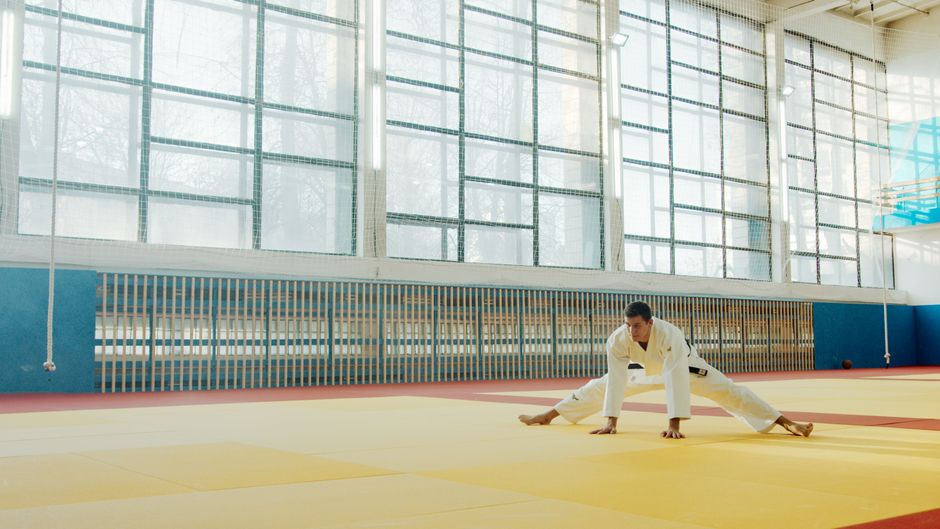
Mobility should be specific to the demands of judo. An athlete may need usable range in the hips, ankles, shoulders, and spine while still maintaining control. Conditioning should complement technical practice and should be adjusted for training age, recovery, injury history, and competition demands.
Common mistakes when developing judo skills
- Using the arms without the legs: Pulling hard cannot reliably replace kuzushi, movement, and body positioning.
- Practising throws without ukemi: Technical progress is limited when the athlete is afraid of falling or cannot land safely.
- Holding a rigid posture: Tension can reduce mobility and make attacks easier to anticipate.
- Repeating one technique without reading reactions: Skill improves faster when drills include direction changes, resistance, and realistic cues.
- Stopping after an incomplete throw: A failed attack can become a counter, pin, or escape if the judoka stays balanced and recognises the transition.
- Confusing effort with control: Maximum force may create short-term success but often causes fatigue and weakens technical timing.
Judo skill development is most effective when technical repetition is combined with progressive resistance. Cooperative practice helps refine the movement pattern; controlled randori tests whether the skill remains available against an unpredictable opponent. Coaches should increase complexity gradually and ensure that intensity, rules, and partner ability are appropriate.
How to measure progress in judo
Progress can be assessed through more than the number of successful throws. Useful indicators include safer and more relaxed ukemi, improved grip decisions, better posture during movement, earlier recognition of attacking opportunities, and the ability to link standing and groundwork without losing control.
A training log can record which grips and entries produce useful reactions, where attacks break down, and how fatigue changes decision-making. Video analysis may reveal problems that are difficult to feel during practice, such as stepping too close, losing sleeve control, or turning the hips late. The purpose is not to collect techniques mechanically; it is to build reliable responses that remain effective under changing pressure.