Standard Swimming Pool Size: Olympic Pool Dimensions Explained
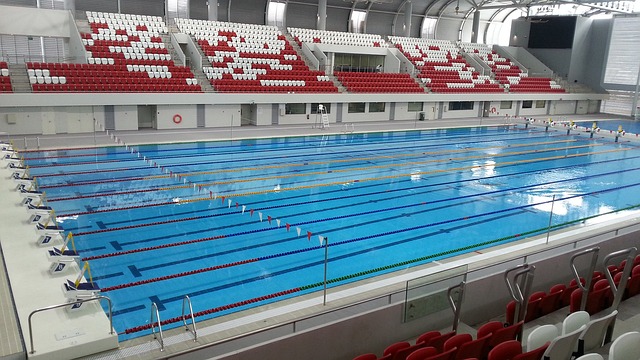
The standard Olympic swimming pool size is 50 metres long and 25 metres wide. This gives the pool a surface area of 1,250 square metres. Olympic-sized pools are built for long-course racing and usually contain 10 lanes, although major competitions commonly use eight lanes for racing and the outer lanes as buffers.
What is the standard Olympic swimming pool size?
An Olympic-size swimming pool measures 50 m by 25 m, or approximately 164 ft by 82 ft. Its exact water volume depends on the pool’s depth, but a pool with a constant depth of 2 metres would hold about 2.5 million litres of water.
| Feature | Standard measurement |
|---|---|
| Pool length | 50 m (164 ft) |
| Pool width | 25 m (82 ft) |
| Surface area | 1,250 m² |
| Typical lane width | 2.5 m (8.2 ft) |
| Typical number of lanes | 10 |
| Common competition depth | At least 2.5 m |
The pool length is measured between the official touch panels or end walls used for timing. This ensures that swimmers complete the required 50-metre race distance. A long-course pool may also be used for events such as the 100 m, 200 m, 400 m, 800 m and 1,500 m freestyle.
Olympic pool lanes and depth
Competition lanes are generally 2.5 metres wide. A 10-lane layout provides space for eight racing lanes plus two outside lanes that help reduce the effect of waves reflecting from the pool walls. Lane ropes separate swimmers and limit turbulence during a race.
For high-level international competition, a pool depth of at least 2.5 metres is commonly specified. Deeper water can help absorb wave energy and create more consistent racing conditions. Diving areas may require additional depth, depending on the facility design and the type of starting platform installed.
How a standard pool compares with other swimming pools
There is no single worldwide standard for a general or residential swimming pool. Pool dimensions depend on the intended use, available space and local building requirements.
- Short-course competition pool: 25 metres long, often used for indoor swimming meets.
- Olympic or long-course pool: 50 metres long and usually 25 metres wide.
- Community training pool: commonly 25 metres long, with fewer lanes and a smaller overall footprint.
- Residential swimming pool: often between 8 and 15 metres long, although custom designs vary widely.
A 25-metre pool is not an Olympic-size pool, even if it has competition-standard lanes. It is normally described as a short-course pool. The phrase “Olympic-size” is best reserved for a pool with the 50-metre long-course length and appropriate competition features.
How much space does an Olympic swimming pool need?
The water surface alone requires 1,250 square metres. A functioning competition venue needs considerably more space for starting blocks, deck areas, officials, timing equipment, spectator seating, changing facilities and safe circulation around the pool.
For that reason, a building designed for an Olympic-size pool must be substantially larger than 50 m by 25 m. Clearance around the pool also supports maintenance, swimmer access and wave control. The final facility dimensions depend on the governing body’s rules and the venue’s layout.
Frequently asked questions about swimming pool dimensions
How deep is an Olympic swimming pool?
High-level competition pools are commonly at least 2.5 metres deep, although the precise depth can vary by facility and event requirements.
How many litres are in an Olympic-size pool?
The answer depends on depth. At a constant depth of 2 metres, a 50 m by 25 m pool contains approximately 2.5 million litres. A deeper pool holds more water.
Is an Olympic pool 50 metres long?
Yes. The defining length of an Olympic long-course pool is 50 metres. A 25-metre pool is a short-course pool rather than an Olympic-size long-course pool.