Paddle Tennis: Rules, Equipment, Court Size and How the Game Works
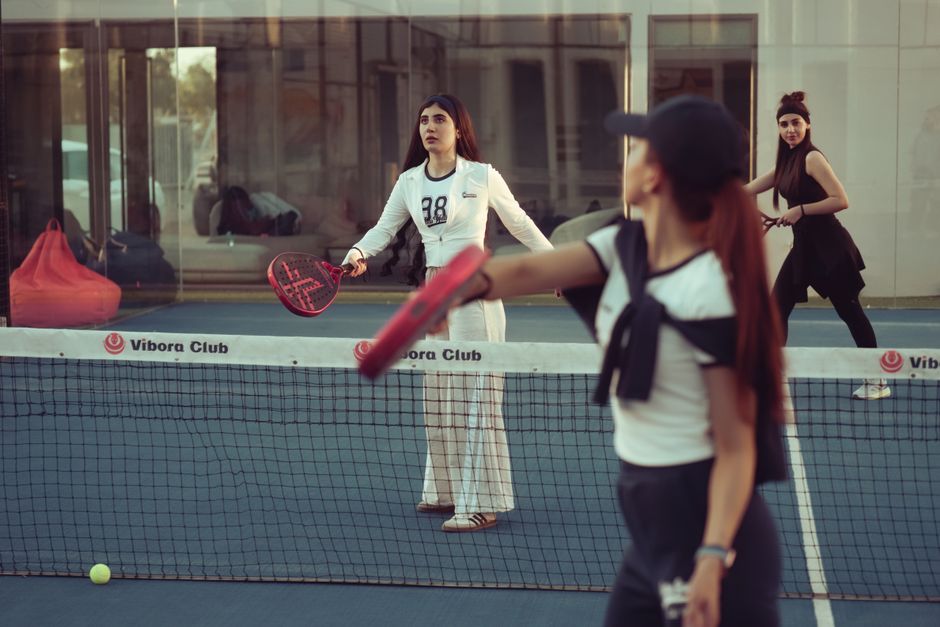
Paddle tennis is a racket sport played on a compact court with a solid paddle and a low-bouncing ball. The name can describe more than one related sport, so understanding the terminology is useful: in many countries, people use “paddle tennis” to mean padel, while in North America it may refer to platform tennis or the smaller court game sometimes called pop tennis.
What is paddle tennis?
The most common international meaning is padel, a doubles sport played on an enclosed court. Players use short, solid rackets with holes and serve underarm. The ball is similar to a tennis ball but usually has slightly lower pressure, and rallies can continue after the ball rebounds from the walls.
Traditional paddle tennis, also known as pop tennis in some regions, is played on a smaller court with solid paddles and a depressurized tennis-style ball. It normally does not use the full wall-play system associated with padel. Platform tennis is another separate variation, usually played outdoors on a raised, heated court surrounded by wire screens. Balls can be played off those screens, but the court, equipment and rules differ from padel.
Paddle tennis, padel and platform tennis compared
| Feature | Padel | Traditional paddle tennis | Platform tennis |
|---|---|---|---|
| Typical format | Doubles | Singles or doubles | Doubles |
| Court | Enclosed court with glass and mesh walls | Small open court | Raised court with screens |
| Racket | Solid perforated padel racket | Solid paddle | Perforated platform racket |
| Wall or screen play | Walls are central to rallies | Usually no wall play | Screen rebounds are part of the sport |
| Serve | Underarm and below waist height | Rules vary by format | Underarm serve |
If someone searches for “paddle tennis court” or “paddle tennis lessons,” checking the local club’s terminology avoids confusion. A facility advertising padel will usually mention glass walls, doubles play and padel rackets. A platform tennis venue will often describe an elevated outdoor court and winter play.
Basic padel rules and scoring
In padel, the serve is made diagonally into the opponent’s service box. The server must bounce the ball before hitting it, and contact must be below waist level. Players receive two service attempts, as in tennis. A serve that touches the net and lands in the correct service box is normally replayed.
After the serve, players may hit the ball directly or allow it to bounce once on their own side. The ball must bounce on the opponent’s court before it can hit a wall. Once it has bounced, it may rebound from the glass or mesh and remain in play. Players can also return a ball after it has come off their own wall, provided they strike it before a second bounce.
Most padel matches use tennis scoring: 15, 30, 40 and game. A set is generally won by the first pair to take six games with a two-game advantage, and a deciding tie-break is commonly used at six games all. Tournament regulations can alter details such as golden points, deciding sets and match length, so players should check the rules for their event.
Equipment for paddle tennis
Racket or paddle
A padel racket has no strings and is made from a solid composite surface with holes. Round rackets usually offer a larger, more forgiving sweet spot, while diamond-shaped models tend to place more weight toward the head and suit experienced players seeking extra power. A teardrop shape sits between those options.
Important specifications include weight, balance, grip length and surface texture. A lighter racket is easier to handle at the net, whereas a heavier model can add pace but may place more stress on the arm. Comfort and control are generally more valuable than maximum power for a new player.
Ball and clothing
Padel balls resemble tennis balls but are designed for the speed and dimensions of the sport. Use balls recommended for padel rather than assuming every tennis ball will behave the same way. Wear non-marking court shoes with dependable lateral support. Tennis shoes with a suitable tread can work, but running shoes are a poor choice because they are not built for quick side-to-side movement.
How to play paddle tennis effectively
Good paddle tennis is based on position and patience as much as striking power. In doubles, partners normally move together so that the gap between them does not become an easy target. After a controlled shot, both players can advance toward the net and protect the middle of the court.
- Use height when defending: a lob can push opponents away from the net and create time to recover.
- Play with margin: aiming safely over the net is more reliable than attempting a winner from every position.
- Watch the rebound: learn how speed, spin and angle change after the ball contacts glass or mesh.
- Protect the middle: many points are won by forcing uncertainty between two opponents.
- Change pace: combine lobs, slower shots and firm volleys instead of using one speed throughout the rally.
Beginners often stand too close to the net or rush to hit a ball before reading its rebound. Allowing the ball to come off the back wall can produce a more balanced return. On the other hand, a ball that is already low and fast may need to be taken early before it reaches the wall.
Common questions about paddle tennis
Is paddle tennis the same as pickleball?
No. Pickleball uses a perforated plastic ball, a different paddle shape and a non-volley zone near the net. Padel and platform tennis use solid or perforated rackets and have different court layouts, balls and scoring systems. Clubs sometimes use overlapping names, but the sports are not interchangeable.
Can tennis players learn paddle tennis quickly?
Tennis players often adapt to the serve and volley movements quickly, but wall play requires a new sense of timing. The ball may be easier to keep in play, yet choosing when to let it rebound is a distinct skill. Doubles positioning and communication also have a larger role in many padel rallies.
Is paddle tennis suitable for beginners?
Yes. The court is smaller than a tennis court, the underarm serve is approachable and rallies can develop without advanced power. New players benefit from a short introduction to scoring, safe movement around walls and basic doubles positioning before playing competitive matches.