
What Is High Jump? The Stages, Rules and Techniques Explained
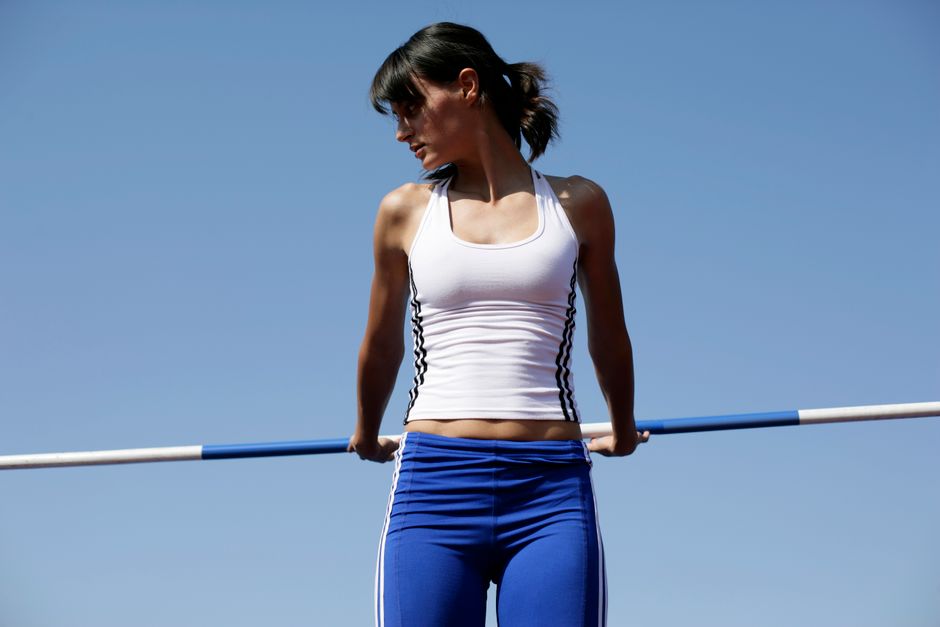
High jump is a track and field event where an athlete runs toward a horizontal bar and attempts to clear it without knocking it down. The bar is supported between two upright standards, and the jumper lands on a padded mat. Athletes compete by clearing progressively higher heights, with the winner recording the highest successful jump.
The Four Main Stages of the High Jump
Every high jump attempt has four connected phases: the approach, takeoff, flight over the bar and landing. A controlled approach creates the speed and body position needed for an effective takeoff.
1. The approach run
The approach run, also called the run-up, allows the athlete to build speed before reaching the takeoff point. Modern high jumpers usually run along a curved path during the final part of the approach. This curve helps create the rotation needed to turn the back toward the bar.
The athlete must keep the approach consistent. The number of strides varies between jumpers, but the final steps are especially important because they establish the correct distance and angle from the bar.
2. The takeoff
At takeoff, the jumper plants one foot on the ground and drives upward. The takeoff foot is placed near the bar but not directly underneath it. The athlete uses the free leg and both arms to help generate vertical lift while maintaining forward momentum.
A strong takeoff depends on an upright posture, a firm plant and accurate timing. Taking off too far from the bar can leave too much distance to cover, while taking off too close may cause contact with the bar.
3. Flight and bar clearance
After leaving the ground, the athlete rotates so the back faces the bar. Most elite jumpers use the Fosbury flop technique, named after Dick Fosbury, who popularized the backward-clearance method. The shoulders and upper back pass over the bar first, followed by the hips and legs.
During the clearance, the jumper arches the back to keep the body’s centre of mass in an efficient position. Once the hips have passed over the bar, the athlete quickly lifts the legs by flexing at the hips and knees. This action helps prevent the heels from striking the bar.
4. The landing
The landing takes place on the back and shoulders in the padded landing area. The jumper should keep the head in a safe position and allow the mat to absorb the impact. A safe landing is a required part of a successful attempt, even though the bar has already been cleared.
How High Jump Competitions Work
Before a competition, officials set a starting height and announce the increments used to raise the bar. Athletes may choose to enter at the starting height or pass an attempt and begin at a higher level.
At each height, a jumper normally receives up to three attempts. An attempt is unsuccessful if the athlete knocks the bar off the supports, touches the ground or landing mat beyond the vertical plane of the nearer edge of the bar before clearing it, or fails to take off from one foot. Three consecutive failed attempts eliminate the athlete from the competition.
The winner is the athlete who clears the greatest height. If two or more competitors finish at the same height, officials compare the number of failures at that height and across the competition. If the tie still cannot be resolved, a jump-off may be used when the result must determine a specific placing.
High Jump Techniques and Equipment
The Fosbury flop is the standard technique in modern high jump because it allows athletes to clear the bar while their centre of mass follows an efficient path. Earlier techniques included the scissor jump, eastern cut-off and western roll. These methods are less common in elite competition but can still help beginners learn takeoff and body control.
High jump equipment includes two upright standards, a flexible horizontal crossbar, support pegs and a thick landing mat. Athletes wear track shoes, often with spikes that improve grip during the curved approach and takeoff. The bar must be supported so that it falls when displaced by a jumper, rather than remaining fixed in place.
What Makes a Successful High Jump?
Successful high jump performance depends on more than jumping power. Athletes need a repeatable approach, precise takeoff accuracy, speed control, body awareness and flexibility. The takeoff must convert horizontal movement into upward lift without losing balance.
Training commonly includes sprint drills, curved-run practice, single-leg jumping, strength work and landing exercises. Beginners should first learn a safe landing and a reliable takeoff before attempting higher bars. Coaches also use approach marks to help athletes reach the takeoff zone consistently.