Types of Wrestling: How the Major Styles Differ
Wrestling can look very different depending on where it is practiced. An Olympic bout may revolve around explosive takedowns and exposure points, while a folkstyle match rewards control, escapes and riding time. Traditional forms across Africa, Asia, Europe and the Americas add still more variations to the sport.
Understanding the main types of wrestling makes the sport easier to follow and shows why wrestling remains important worldwide. Its styles develop strength, balance, discipline and tactical awareness, but each one has its own rules, scoring priorities and cultural history.
Olympic and competitive wrestling styles
Freestyle wrestling
Freestyle wrestling is one of the two Olympic wrestling disciplines. Wrestlers may attack the legs as well as the upper body, making single-leg and double-leg takedowns central to many matches. A takedown is followed by attempts to turn an opponent onto the back, and a pin ends the contest immediately.
Freestyle wrestling rewards constant movement. Competitors often create openings with hand fighting, level changes and quick attacks, then use leg control or turns to build a scoring advantage. The style is practiced in men’s and women’s competition and is one of the most widely recognized forms of amateur wrestling.
Greco-Roman wrestling
Greco-Roman wrestling limits attacks to the area above the waist. Wrestlers cannot use direct leg attacks or trip an opponent with their own legs, so throws, body locks and upper-body control are especially important.
The style places unusual emphasis on lifting and throwing. A clean high-amplitude throw can produce a large score, while forcing an opponent out of the wrestling area can also change the momentum of a bout. Greco-Roman wrestling is an Olympic sport and has roots in European wrestling traditions.
Folkstyle and scholastic wrestling
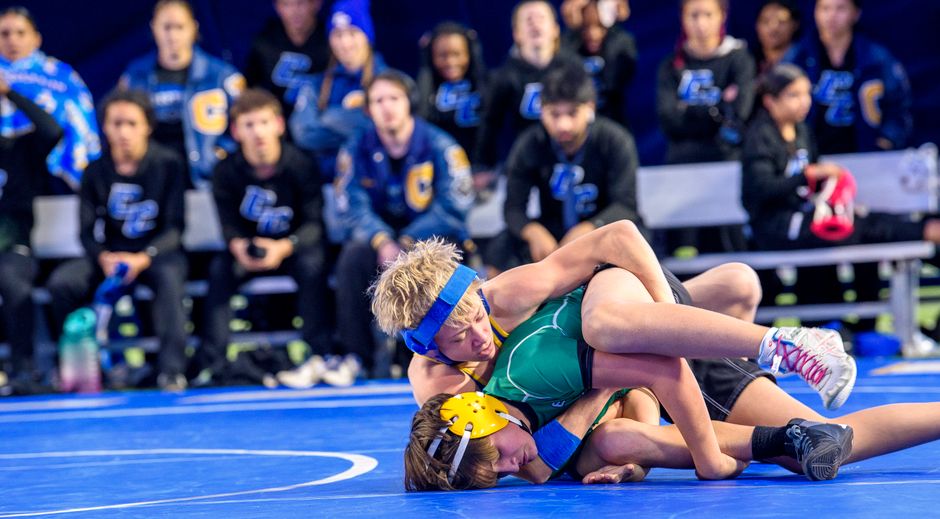
Folkstyle wrestling is the ruleset most closely associated with school and college wrestling in the United States. It shares takedowns, reversals, near-falls and pins with other forms, but it gives particular value to control from the top position.
Riding time, escapes and reversals make folkstyle wrestling distinct from freestyle and Greco-Roman competition. A wrestler may win not only by attacking from neutral position but also by controlling an opponent for extended periods. Scholastic wrestling usually refers to school-level competition, while collegiate wrestling is the higher-level college version.
Traditional and regional wrestling forms
Folk wrestling
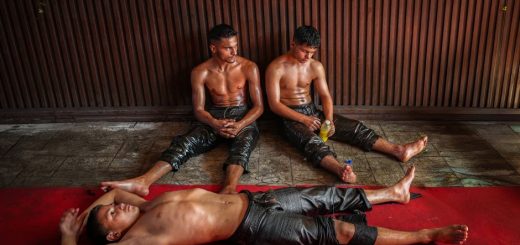
Folk wrestling describes traditional styles developed by particular communities rather than a single international ruleset. Examples include Senegalese wrestling, Turkish oil wrestling, Mongolian wrestling, Swiss schwingen, Icelandic glíma and various West African, Central Asian and European forms.
Rules can differ dramatically. Some styles emphasize throwing an opponent onto the back, others use a jacket or belt grip, and some are held outdoors during festivals. Traditional wrestling often carries social and ceremonial importance as well as sporting value, connecting competition with local identity, music, clothing and community gatherings.
Beach wrestling
Beach wrestling is contested on sand with a simplified ruleset and a small circular competition area. The format is fast and accessible, with athletes seeking takedowns or forcing opponents out of bounds rather than working through the longer positional sequences common in indoor wrestling.
Because it requires limited equipment and can be staged in a public outdoor setting, beach wrestling has become an appealing format for international events and grassroots participation. Balance, speed and awareness of the boundary are particularly valuable.
Sumo wrestling
Sumo is a Japanese wrestling tradition with rules and rituals unlike those of Olympic wrestling. Two wrestlers compete in a circular ring, and a bout usually ends when one competitor is forced out or touches the ground with a body part other than the soles of the feet.
Although sumo does not use takedown points or pinning in the same way as freestyle wrestling, it relies on many of the same physical qualities: grip strength, footwork, leverage, timing and the ability to generate force from a stable position.
Grappling styles and wrestling-related competition
Submission wrestling
Submission wrestling combines takedowns, positional control and submissions such as joint locks and chokes. A match may begin standing and continue on the ground, with competitors trying to improve position before finishing the contest by submission or points.
This category includes no-gi grappling and rulesets influenced by catch wrestling, Brazilian jiu-jitsu and mixed martial arts. The exact scoring and permitted techniques vary, so athletes should check whether a competition allows leg locks, neck cranks or other advanced submissions.
Catch wrestling
Catch wrestling is a grappling style built around takedowns, pins and submission holds. Its historical influence can be seen in professional wrestling, submission grappling and some modern combat-sport training. Unlike Olympic wrestling, catch wrestling often treats submission holds as a central route to victory rather than an occasional addition.
Professional wrestling
Professional wrestling is a performance-based form of sports entertainment rather than an amateur combat sport. Matches use wrestling-inspired holds, throws and strikes within planned storylines and carefully coordinated performances. The physical demands are still substantial: performers need conditioning, timing, strength, athletic ability and the skill to protect themselves and their opponents.
Professional wrestling should therefore be considered separately from competitive wrestling styles such as freestyle, Greco-Roman and folkstyle. Its importance lies in spectacle, storytelling and popular culture, while amateur wrestling is primarily judged through live competition under standardized rules.
How the wrestling styles compare
The biggest differences between wrestling styles concern legal grips, scoring and the route to victory. Freestyle allows leg attacks and rewards exposure, Greco-Roman concentrates on upper-body throws, and folkstyle gives extra importance to control and riding. Submission grappling adds joint locks and chokes, while beach wrestling simplifies the contest for a short outdoor format.
| Wrestling style | Main emphasis | Typical way to win |
|---|---|---|
| Freestyle | Leg attacks, takedowns and turns | Points, technical superiority or pin |
| Greco-Roman | Upper-body control and throws | Points, technical superiority or pin |
| Folkstyle | Control, escapes, reversals and near-falls | Points, major decision or pin |
| Beach wrestling | Fast takedowns and boundary awareness | Points or clear scoring advantage |
| Submission wrestling | Position and finishing holds | Submission or points |
| Professional wrestling | Performance, character and storytelling | Planned match result |
Why the different types of wrestling matter
Wrestling’s variety is one reason the sport has remained important across generations. Olympic wrestling provides a shared international ruleset, folk wrestling preserves local traditions, and school-based styles introduce young athletes to competition and disciplined training. Grappling formats also offer routes for people who prefer technical ground fighting or submission-based contests.
Across these styles, wrestlers learn to manage pressure, read movement and make decisions while physically tired. Those qualities explain wrestling’s influence on many other sports, including judo, mixed martial arts, rugby and American football. The rules change, but the central challenge remains recognizable: use position, timing and leverage to control an opponent.