Five Basic Skills in Tennis Every Player Should Develop
The five basic skills in tennis are the forehand, backhand, serve, volley and footwork. Together, they form the foundation of reliable tennis technique. A player does not need a powerful shot in every situation; consistent contact, sound movement and good decision-making usually matter more at the early stages.
1. Forehand
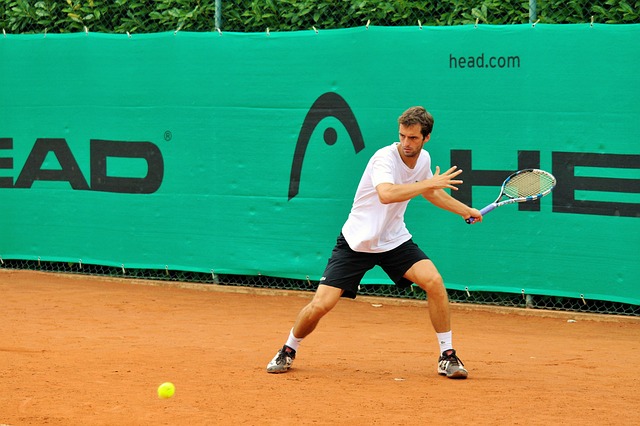
The forehand is often the first groundstroke players develop. It is played on the side of the body covered by the dominant hand and is used to attack, defend and build rallies from the baseline.
A dependable forehand starts with an early turn of the shoulders and a stable preparation. The racket should move back before the ball reaches the ideal contact area. Contact is generally made in front of the body, followed by a relaxed swing and a finish across or above the opposite shoulder.
- Move into position instead of reaching for the ball.
- Keep the head still through contact.
- Use the legs and torso rather than relying only on the arm.
- Prioritize height and depth before trying to hit harder.
Common forehand errors include an open racket face, late preparation and excessive wrist movement. Players working on tennis groundstrokes should first aim for a repeatable swing with a comfortable margin over the net.
2. Backhand
The backhand can be hit with one hand or two. The two-handed backhand is often easier for newer players to control because the second hand adds stability, while the one-handed version can provide reach, variety and a useful slice.
Good backhand technique depends on turning the shoulders early and meeting the ball in front of the body. On a two-handed stroke, the non-dominant hand contributes much of the forward drive. Players should avoid pulling the racket across the body with only the dominant arm.
For a one-handed backhand, balance and spacing are especially important. A slice backhand uses a high-to-low swing path and can stay low after the bounce, but it should not become a substitute for learning a dependable topspin or drive backhand.
3. Serve
The serve begins every point, making it one of the most influential skills in tennis. A basic serve requires a consistent stance, controlled ball toss, smooth arm action and contact at full extension.
The toss should be placed where the player can reach it comfortably rather than thrown too far forward or behind the body. The serving motion then combines the legs, trunk, shoulder and arm. Beginners should focus on rhythm and placement before trying to generate maximum speed.
- Use the same preparation for first and second serves when possible.
- Practice serving to specific targets rather than only hitting hard.
- Develop a reliable second serve with spin and height over the net.
- Land in balance so the first shot after the serve is easier to play.
Typical serving problems include an inconsistent toss, a tense grip and stopping the motion after contact. A slower serve that lands regularly is more useful in a match than a fast attempt that produces frequent double faults.
4. Volley
A volley is played before the ball bounces, usually near the net. It requires a compact racket movement, quick preparation and accurate control. Unlike a baseline groundstroke, a volley does not need a large backswing.
The racket should stay in front of the body, with the player using a short punch or firm block to direct the ball. A continental grip is commonly used because it supports both forehand and backhand volleys without a grip change.
Footwork makes the volley more effective. Move through the shot, keep the body balanced and try to contact the ball in front. Players should also learn the difference between a defensive volley, which may need height, and an attacking volley, which can be directed away from the opponent.
5. Footwork and court movement
Footwork connects every other tennis skill. It helps a player reach the ball on time, maintain balance and recover for the next shot. Even technically sound strokes become unreliable if the player is late or poorly positioned.
Useful movement patterns include the split step before an opponent hits, quick adjustment steps and a recovery move back toward a sensible court position. The split step keeps the body ready to move in either direction, while small adjustment steps help create better spacing for the swing.
- Stay light on the feet as the opponent makes contact.
- Use short steps near the ball instead of one large final step.
- Recover after each shot rather than watching the result.
- Learn when to move forward, stay back or defend from a wider position.
Many players try to solve movement problems by swinging faster. Improving the first step and the recovery position usually has a greater effect on consistency.
How to practise the basic tennis skills
Practice is more effective when each session has a clear purpose. For example, spend part of a session on cross-court forehands and backhands, then work on serve targets, short-court volleys and movement patterns. Start at a comfortable pace and increase speed only when the technique remains stable.
Cooperative rallies are useful for learning control, while point-based drills show whether a skill works under pressure. A player who can hit a forehand during feeding practice should also practise choosing the right height, direction and margin during live points.
These five skills are closely connected. Better footwork improves contact on groundstrokes, a reliable serve creates easier first shots, and stronger volleys reward players who move forward with balance. Progress comes from building consistency across all five areas rather than relying on one impressive shot.