What Is Curling? Rules, Scoring and How the Sport Works
Curling is a team sport played on a long sheet of ice. Players slide heavy, polished granite stones toward a circular target called the house. The team with stones closest to the centre of the house scores points after all stones have been delivered.
Often described as a mix of precision, strategy and sweeping technique, curling is played in many countries and is an Olympic and Paralympic sport. Although the stones move slowly, every shot involves decisions about speed, direction, position and risk.
How curling works
A standard curling team has four players: the lead, second, vice-skip and skip. Each player usually delivers two stones in every end, for a total of eight stones per team. An end is one round in which both teams throw all of their stones.
The skip directs the team’s strategy from the far end of the sheet. The lead and second generally deliver the opening stones, while the vice-skip helps communicate with the skip and may take over tactical duties when the skip is delivering a stone.
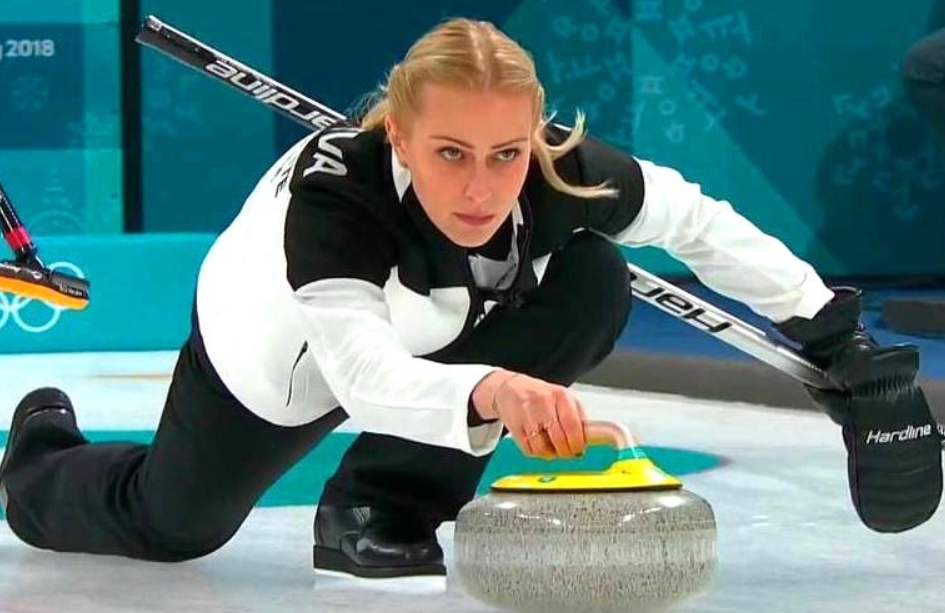
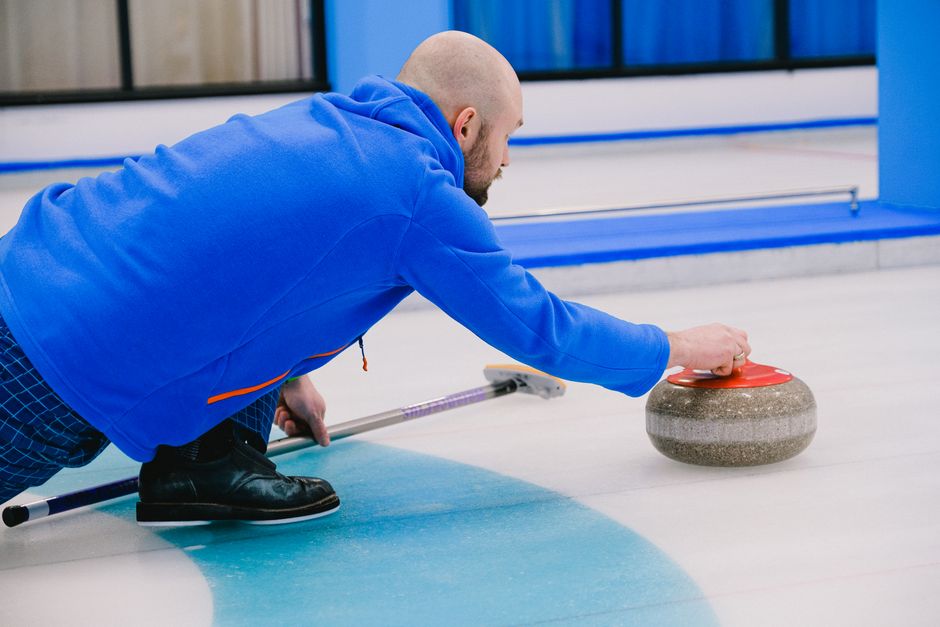
Players start from a foothold called the hack. They push out from the hack and release the stone before it reaches the near hog line. A valid delivery must cross the far hog line and remain inside the playing area. Stones that stop outside the boundaries are removed from play.
The curling sheet and house
The playing surface is known as the sheet. It contains several important markings, including the hack, hog lines, centre line, sidelines and back line. At the far end is the house, made up of concentric circles.
The centre of the house is called the button. The circles help players and officials judge which stones are closest to the button. A stone must be at least partly inside the outer circle to remain eligible for scoring.
Before a match, tiny water droplets are sprayed onto the ice to create a textured surface called pebble. Pebbled ice lets the stones glide and curl in a controlled way. Ice temperature, humidity and the condition of the pebble can all affect how a shot travels.
How curling stones move
A curling stone does not travel in a perfectly straight line. The player gives it a gentle rotation at release, causing it to curve, or curl, as it moves down the sheet. The direction and amount of curl depend on the release, ice conditions and the stone’s speed.
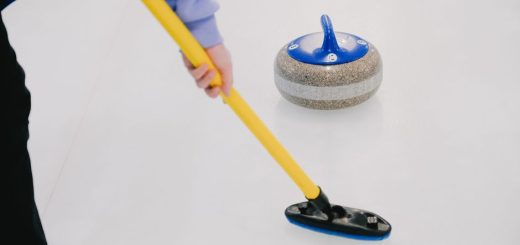
Players can influence the stone after release by sweeping the ice in front of it. Sweeping reduces friction and can make the stone travel farther and curl less. It can also help keep the stone on its intended line. Sweepers must judge the stone’s speed and path quickly, because a small adjustment can change the final result.
How scoring works in curling
Only one team can score in an end. After all 16 stones have been played, the team with the stone closest to the button scores one point for that stone and any additional stones that are closer to the button than the opponent’s nearest stone.
For example, if a team has three stones closer to the button than the other team’s nearest stone, it scores three points. Stones outside the house do not count, and a stone touching the outer edge of the house may still be in play.
The team that scores usually delivers the first stone in the next end. This creates a strategic balance: scoring several points is valuable, but having the final stone, known as the hammer, can provide a major advantage. A team that fails to score with the hammer records a blank end and keeps the hammer for the following end.
Common curling shots and tactics
A draw is a controlled shot designed to stop in the house. A takeout hits an opponent’s stone and removes it from play. A guard stops in front of the house to protect a later draw or block an opponent’s path to the button.
A freeze stops directly against another stone, making it difficult to remove without disturbing the protected stone. A raise moves one friendly stone into a better position by striking it with another stone. Teams choose among these shots based on the score, the number of stones remaining and the location of the hammer.
Early in an end, teams may place guards and build a cluster of stones around the house. Later shots often focus on removing threats or controlling the centre. The skip must weigh the potential reward of an aggressive shot against the risk of leaving the opponent with an easy scoring opportunity.
How a curling match is won
Most traditional curling matches are played over a set number of ends, commonly eight or ten. The team with the higher score at the end of the match wins. In some competitions, a tied game goes to an extra end, with the hammer determined by the competition rules.
Mixed doubles curling uses two players per team and fewer stones. Each team also places one stone on the sheet before play begins. This faster format has different tactical demands and is part of the Winter Olympic programme alongside traditional team curling.
Why curling is called a precision sport
Curling combines physical control with detailed tactical planning. Players need balance and accuracy to deliver a stone, strength and timing to sweep effectively, and clear communication to adjust a shot while it travels.
The sport is played on ice, but it is not simply about sliding a stone toward a target. Teams constantly manage angles, guards, weight, curl, shot selection and the advantage of the hammer. That combination makes curling a strategic target sport as well as an ice sport.