
Curling Scoring Explained: How Points, Ends and the Hammer Work
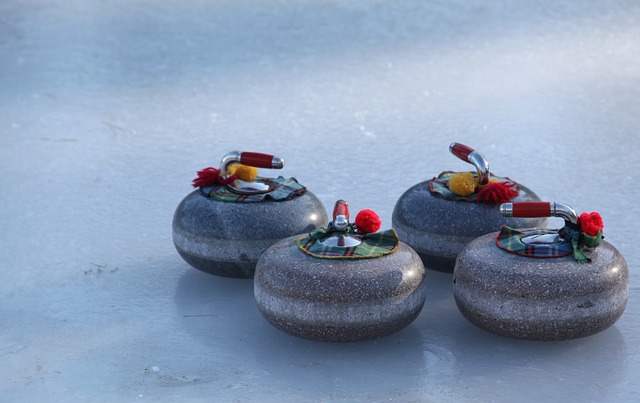
Curling scoring is based on which team places stones closest to the centre of the house. A match is divided into ends, and each end works like an individual round. Only one team normally scores in an end, although it can score several points if it has more than one stone closer to the button than the opponent’s nearest stone.
How a curling end is scored
Teams take turns delivering stones towards the house, the circular target at the far end of the sheet. The button is the centre of the house. After all stones have been played, officials or players compare the positions of the stones around the button.
The team with the closest stone scores one point. It also scores one additional point for every other stone that is closer to the button than the opposing team’s closest stone. Stones outside the house do not score, even if they are closer to the centre line than another stone.
For example, if Team A has three stones inside the house and all three are closer to the button than Team B’s nearest stone, Team A scores three points. If Team B has the closest stone, Team A scores nothing and Team B counts any other stones that are closer than Team A’s best stone.
The house, button and measuring shots
The house contains several coloured rings, but the rings do not have separate point values. They help players judge distance and strategy. A stone touching the outer edge of the house can still count, while a stone that is completely outside it cannot score.
When two stones appear too close to call, a measuring device is used to compare their distances from the button. The stone nearest the centre determines which team has scoring rights for that end. Measurements can be made during the end in some situations, but the final score is confirmed after the last stone has stopped.
What the hammer means in curling
The hammer is the advantage of throwing the final stone of an end. That last delivery can remove an opponent’s counting stone, draw into the house or score multiple points. The team without the hammer throws first in the end.
At the start of a match, the hammer is commonly decided by a draw to the button or another pre-match procedure. After an end, the team that scores usually gives up the hammer for the next end. If the end is blank and nobody scores, the same team keeps the hammer.
Blank ends and steals
A blank end occurs when all stones are removed from scoring position, so neither team scores. The team holding the hammer normally keeps it. Blank ends are often deliberate: a team with the last stone may prefer to score nothing rather than settle for a single point, preserving the hammer for a better scoring chance.
A steal happens when the team without the hammer scores. This usually means it has placed one or more stones closer to the button than every stone belonging to the team with the final delivery. A steal can be worth one point or several, depending on the final arrangement.
Match totals and winning a curling game
The points from each end are added to produce the match score. Traditional games often use eight or ten ends, depending on the competition. Olympic and many elite four-player events generally use ten ends, while club and recreational games may use eight.
The team with the higher total after the scheduled ends wins. If the score is tied, an extra end is played. The team that scores in the extra end wins, so an extra end does not need to continue once a result is established. In many formats, the team with the hammer in the extra end has a significant advantage.
Curling scoring in mixed doubles
Mixed doubles curling uses a different setup from the four-player game. Teams usually begin each end with stones already positioned on the sheet, and each team delivers fewer stones. The same basic principle still applies: the team with stones closest to the button scores, and only one team scores in an end.
Mixed doubles also includes a power-play option in many competitions. This changes the starting placement of the fixed stones for one end and is intended to create more attacking opportunities. The exact rules can vary by event, so the competition regulations take priority.
Common curling scoring questions
- Can both teams score in one end? No. Only the team with the closest stone can score.
- How many points can a team score? It can score several points in one end, depending on how many of its stones are closer to the button than the opponent’s best stone.
- Does the colour of a ring decide the score? No. Distance from the button decides which stones count.
- What happens if no stone is in the house? The end is blank, and no points are awarded.
- Does the hammer always win the end? No. The hammer gives the final-stone advantage, but the other team can steal points.
The simplest way to read a curling scoreboard is to look at each end separately: identify the closest stone, count every stone from that team that is closer than the opponent’s best stone, and add those points to the match total.