How Are Curling Stones Made? From Granite to the Ice
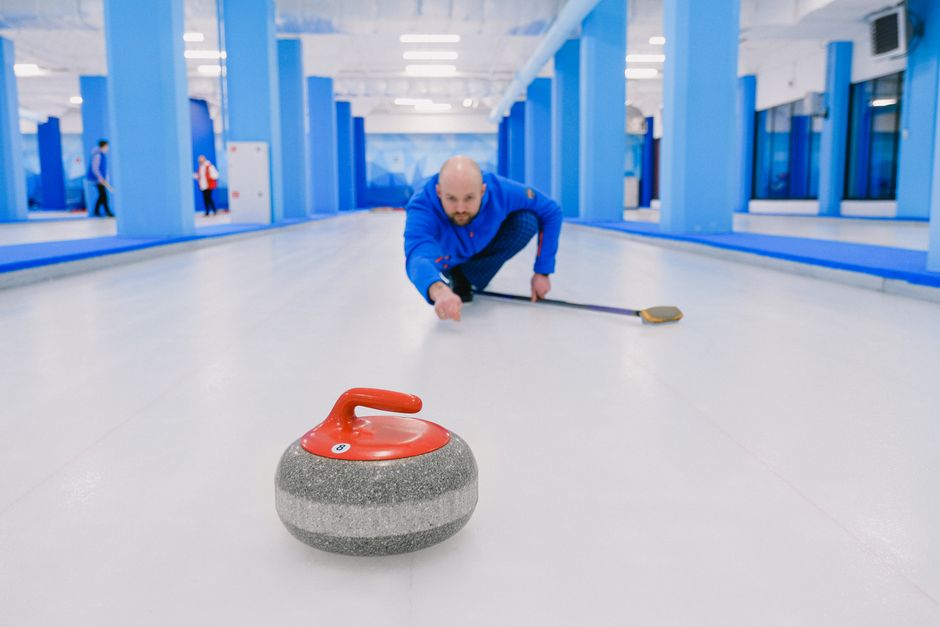
A curling stone looks simple on the ice: a rounded block of granite, a coloured handle, and a narrow running surface. Making one is far more exacting. The stone must be balanced, durable enough to withstand repeated impacts, and finished so that it glides and curls predictably across specially prepared ice.
That combination explains why curling stones are made from particular types of granite rather than ordinary building stone. Their performance depends on the rock’s mineral structure, the shape of the body, the polish of the running surface, and the way each stone is tested before competition.
What are curling stones made from?
Most curling stones are made from dense granite, a hard igneous rock formed when molten material cools slowly beneath the Earth’s surface. Granite contains several minerals, including quartz and feldspar, but not every granite has the strength, consistency, and resistance to water absorption needed for curling.
Traditional curling stone production has been strongly associated with Scottish granite, especially stone from Ailsa Craig, an island in the Firth of Clyde. Two varieties are often discussed in relation to curling: Blue Hone granite and Ailsa Craig Common Green. Their precise uses depend on the manufacturer, but selected granite may be used for the main body, the striking band, or the running surface because different sections need different qualities.
The striking band must cope with repeated collisions. The running surface, meanwhile, is the small ring of stone that contacts the ice. It needs to be hard and carefully finished so the curling rock travels consistently without creating excessive friction or damaging the playing surface.
How are curling stones made from granite?
The process begins at a quarry, where large blocks are cut from suitable granite deposits. Quarry workers and manufacturers look for stone with a reliable structure and as few natural weaknesses as possible. Blocks are then sawn into rough pieces that are large enough to become individual stones.
Those pieces are shaped on industrial cutting and grinding equipment. The broad circular body, sloping sides, and recessed upper area are formed gradually rather than in one cut. Removing material in controlled stages helps manufacturers maintain the correct weight and reduces the chance of exposing a crack or other flaw.
After rough shaping, the stone is machined to its final dimensions. A regulation curling stone has a circular profile and a carefully controlled height, diameter, and weight. The exact tolerances matter because even a small imbalance can affect how the stone moves or how it reacts during contact with another rock.
The running surface gives the stone its behaviour
One of the most distinctive parts of curling stone manufacturing is the running surface. It is not the entire bottom of the rock. Instead, it is a narrow ring that touches the ice, leaving a slightly recessed area inside it.
This design limits contact with the ice and helps the stone slide while preserving the ability to curl. Technicians grind and polish the ring to a highly controlled finish. The width, flatness, and texture of this surface influence both speed and direction, so it is checked with precision tools rather than judged by appearance alone.
The stone’s underside also needs to be clean and free from damage. A rough edge or uneven section can alter the path of the rock and may scratch or disturb the ice. Manufacturers therefore inspect the running surface throughout the finishing process, not only at the end.
Adding the handle and striking band
The coloured handle is attached to the top of the granite body with a secure fixing system. Handles are usually made from a durable synthetic material and are shaped to give players a consistent grip. Their colours help teams distinguish one set of stones from another during play.
Many curling stones also have a contrasting striking band around the widest part of the body. This band is designed to take much of the force when stones collide. It may be formed from a particularly resilient section of granite or finished as part of the stone’s outer surface, depending on the manufacturer’s construction method.
Once the handle is fitted, the stone is cleaned, marked, and checked again. The finished appearance matters, but the important tests concern balance, dimensions, weight, and the condition of the running surface.
How curling stones are tested
Quality control is central to curling stone production because stones are used in matched sets. Manufacturers compare each stone against the required specifications and against the other rocks in its set.
- Weight and dimensions: The stone is measured to confirm that it falls within the permitted limits.
- Balance: Technicians check that the centre of mass and the running surface do not create an unintended bias.
- Surface condition: The running ring is inspected for flatness, consistent width, and defects.
- Durability: The granite is examined for cracks or weaknesses that could worsen after repeated impacts.
- On-ice performance: Finished stones may be tested on ice to compare their speed, curl, and reaction in play.
Even properly manufactured stones can change over time. Impacts gradually wear the striking area, while contact with ice and regular maintenance affect the running surface. Curling clubs may have stones resurfaced, a process often called re-running or reconditioning, to restore a consistent contact ring.
Why curling stones are expensive
The cost of a curling stone reflects more than the price of granite. Suitable rock is limited, large blocks can contain hidden flaws, and much of the final shape must be produced through slow precision grinding. A failed stone represents wasted material and labour.
Manufacturers also need to keep stones within narrow specifications and ensure that a complete set behaves consistently. That combination of specialised raw material, skilled machining, detailed finishing, and testing makes curling stone manufacturing a highly specialised craft.
Frequently asked questions about curling stone production
Are all curling stones made from the same granite?
No. Manufacturers use selected granites with suitable hardness, density, and resistance to water absorption. Different parts of a stone may also use granite chosen for different performance requirements.
Why do curling stones have a ring on the bottom?
The ring is the running surface. By reducing the area that touches the ice, it helps the stone travel smoothly and curl in a controlled way.
Can a damaged curling stone be repaired?
Minor wear can often be addressed by resurfacing or reconditioning the running surface. A major crack or serious structural damage may make the stone unsafe or unsuitable for competition.
Does the handle make the stone curl?
The handle itself does not create the curl. The stone’s rotation, its running surface, the ice texture, and the sweeping action all affect the path. The handle mainly allows the player to grip and rotate the stone consistently.