
Meaning of ST in Football: Position, Role and Formation
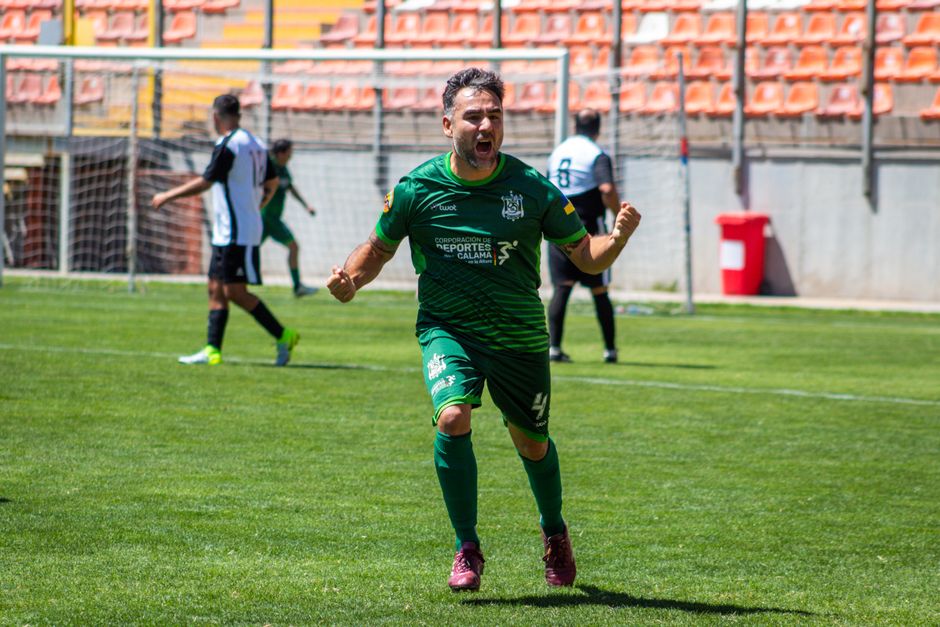
In football, ST usually means striker. It is a forward position whose primary responsibility is to threaten the opposition goal, receive the ball in advanced areas and finish attacking moves. On team sheets, formation graphics and football video games, “ST” is commonly used instead of writing “striker” in full.
What does ST mean in football?
ST stands for striker, often referring to the most advanced central attacker. The striker normally operates near the opposition penalty area and tries to stay available for passes behind or between defenders. Depending on the coach’s tactics, the player may lead the line alone or partner another forward.
The abbreviation is not a formal rulebook position. It is a practical label used by coaches, broadcasters, statistics providers and games. Its exact meaning can therefore vary slightly. On one lineup, ST may describe a traditional centre-forward; on another, it may describe a mobile forward who regularly moves into wide or deeper areas.
What does a striker do?
A striker’s work is broader than simply taking shots. The role usually includes:
- Finishing attacks: converting chances with the feet or head.
- Making runs: moving behind the defensive line or into spaces between defenders.
- Holding up play: receiving a forward pass, protecting the ball and bringing teammates into the attack.
- Linking attacks: combining with midfielders, wingers and another forward.
- Pressing defenders: closing down opponents to force rushed passes or mistakes.
- Occupying defenders: keeping centre-backs engaged so teammates can attack open space.
Different systems give priority to different duties. A target striker may be selected for aerial ability and physical strength, while a pressing striker may be valued for speed, movement and defensive work. A team that dominates possession may need a striker who can combine in tight spaces; a team that relies on counterattacks may prefer a forward who attacks space quickly.
ST compared with CF, SS and other forward positions
ST and CF are often used almost interchangeably. CF means centre forward, and it can describe a striker positioned centrally. In some tactical systems, however, “centre forward” has a broader meaning and includes a player who drops deeper to connect play.
SS usually means second striker. A second striker plays behind or alongside the main striker rather than remaining as the highest player. The position often involves receiving the ball between midfield and defence, creating chances and making late runs into the penalty area.
LW and RW mean left winger and right winger. These players generally begin wider than an ST, although modern forwards can switch positions during an attack. CAM means attacking midfielder, a role that normally starts deeper and focuses more on chance creation than on leading the line.
| Abbreviation | Usual meaning | Typical starting area |
|---|---|---|
| ST | Striker | Central, furthest forward |
| CF | Centre forward | Central forward area |
| SS | Second striker | Behind or beside the main striker |
| CAM | Attacking midfielder | Behind the forwards |
| LW/RW | Left/right winger | Wide attacking areas |
Where ST appears in common formations
A formation with one striker, such as 4-3-3 or 4-2-3-1, usually has one ST at the top of the attack. In a 4-3-3, the striker is supported by two wide forwards. In a 4-2-3-1, the striker often plays ahead of an attacking midfielder and may be asked to hold the ball while the midfield advances.
Systems with two forwards, such as 4-4-2, may show two ST positions. The pair can have different responsibilities: one striker may challenge for crosses and hold up the ball, while the other runs beyond the defence or drops into supporting areas.
A formation graphic does not show every movement made during a match. A listed ST may drift wide, drop into midfield or exchange positions with a winger. The label identifies the player’s main starting role, not a permanent location on the pitch.
Other meanings of “ST” in football
The surrounding context matters. In a lineup or formation graphic, ST almost always refers to striker. In match reports or live commentary, a similar abbreviation may be used differently by a particular website or competition. “St” can also appear as part of a club or stadium name, rather than as a tactical position.
It should not automatically be confused with stoppage time. Stoppage time is usually written as “added time,” “injury time” or “stoppage time,” and match clocks may display it as additional minutes such as 45+2 or 90+5. If “ST” appears beside a player in a lineup, it is describing the striker position; if it appears in a time-related match update, the context may be different.
Frequently asked questions
Is ST the same as a striker?
Yes. In most football formations, ST is the abbreviation for striker. The player usually starts centrally and furthest forward, although the tactical responsibilities can differ between teams.
Is ST the same as centre forward?
Often, but not always. ST and CF may identify the same player, especially in simple formation graphics. Some systems use CF for a forward who drops deeper or links play more frequently.
Can there be two ST players?
Yes. A team using two forwards can list two ST players, as in a 4-4-2. Their roles may still differ even though both are classified as strikers.
What is the difference between ST and SS?
ST usually refers to the main striker, while SS means second striker. The second striker normally plays behind or alongside the main forward and contributes more frequently to creative and linking play.
Does ST mean stoppage time?
Usually not when it appears beside a player or formation position. In that setting, ST means striker. Time-related uses depend on the notation used by the specific competition, broadcaster or website.