Weak Point in a Fight: Safe Self-Defense Without Escalation
The phrase weak point is often used to describe a vulnerable area or moment during a fight. In real-world violence, however, there is no guaranteed target that will stop an attacker. Pain responses vary, adrenaline can mask injury, and trying to strike a specific body part may make the situation more dangerous.
A safer approach to self-defense focuses on avoiding the confrontation, creating space, protecting yourself, and leaving as soon as possible. The information below is general safety guidance, not instructions for attacking someone.
Why “weak points” are unreliable in a fight
People respond differently to impact, fear, alcohol, drugs, fatigue, and adrenaline. A move that appears effective in a controlled martial arts demonstration may fail in an unpredictable street confrontation. Clothing, poor visibility, uneven ground, multiple people, and concealed weapons can also change the situation immediately.
Searching for the best place to hit someone can create false confidence. It may encourage you to move closer, lose sight of an escape route, or continue an encounter after you have an opportunity to leave. It can also cause serious injury and legal consequences.
For personal safety, think in terms of vulnerable situations rather than vulnerable body parts. Being cornered, distracted, outnumbered, or trapped near traffic creates risk. Recognising those conditions early is more useful than memorising an anatomical target.
Safer priorities during a threatening encounter
- Use your voice. A clear statement such as “Stop,” “Back away,” or “I do not want trouble” can set a boundary and attract attention.
- Create distance. Move toward open space, exits, staff, security personnel, or other people. Keep obstacles between you and the threat when possible.
- Protect your head and balance. Keep your hands up in a non-threatening protective position, avoid being pushed against a wall, and stay aware of your footing.
- Do not let pride control the decision. Walking away is a successful outcome. Possessions can usually be replaced; injuries may have lasting effects.
- Call for help. Contact local emergency services when there is an immediate threat. In a public place, ask a specific person to call rather than shouting generally for help.
If physical contact cannot be avoided
The main objective should be to protect yourself and escape, not to win a fight. Cover your head, keep breathing, stay aware of the surrounding space, and look for a safe route away. Avoid chasing, taunting, or returning to the confrontation once you have reached safety.
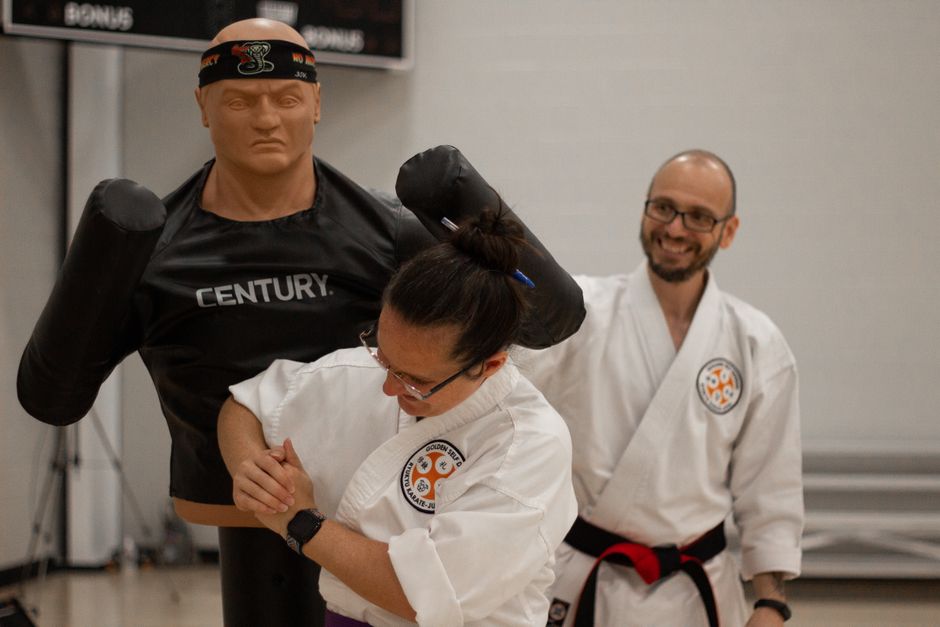
If you are grabbed or knocked down, focus on protecting vital areas, making space, and moving toward people or an exit. The exact response depends on the environment and the type of restraint, which is why practical instruction from a qualified self-defense or martial arts instructor is safer than relying on online descriptions of “weak points.”
Training that improves real-world safety
A reputable self-defense class should cover awareness, verbal de-escalation, boundary setting, escape planning, falling safely, and stress management. Look for instructors who emphasise avoidance and legal responsibility rather than promising that a single technique can defeat a larger opponent.
Combat sports such as boxing, wrestling, judo, or Brazilian jiu-jitsu can improve fitness, coordination, balance, and composure. They are not a guarantee of safety, and training should take place under controlled rules with appropriate protective equipment. Competition skills should not be treated as permission to use force outside a lawful, necessary situation.
After a fight or assault
Move to a safe location and contact emergency services if anyone is injured, unconscious, having trouble breathing, or may have suffered a head, neck, or internal injury. Seek medical attention even when pain seems minor; adrenaline can hide symptoms. Document what happened when it is safe, preserve relevant evidence, and report the incident to the appropriate authorities.
If you are worried about a recurring threat, speak with local law enforcement, a victim-support organisation, or a qualified safety professional. A personal safety plan based on your location, routine, and circumstances is more dependable than trying to memorise a single weak point.