
Softball Positions Explained: Roles, Responsibilities and Field Numbers
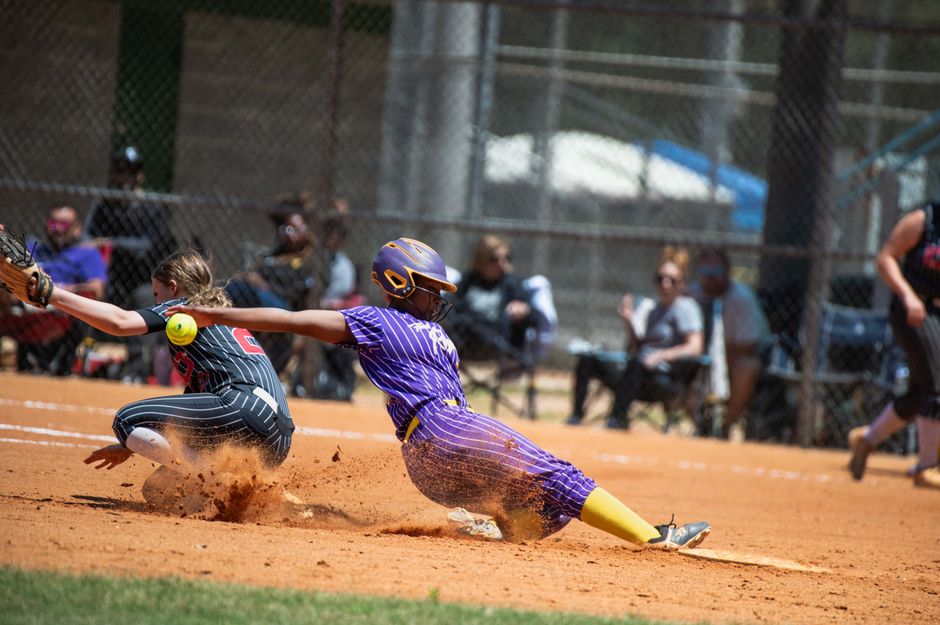
A softball defense can look quiet for several seconds, then demand a full-team reaction from one sharply hit ground ball. Each player has a defined place on the field, but the real structure of softball positions comes from how those roles connect before, during and after every pitch.
The nine standard softball positions
A standard softball defense has nine players. The positions are divided into four infield roles, three outfield roles, a pitcher and a catcher. Scorekeepers usually identify them by both name and number.
- 1 — Pitcher (P): Delivers the pitch and becomes an active defender after the ball is hit. The pitcher covers plays near the circle and helps field bunts and softly hit balls.
- 2 — Catcher (C): Receives pitches behind home plate, communicates with the pitcher and manages plays at the plate. The catcher also fields bunts and throws to bases when runners attempt to advance.
- 3 — First baseman (1B): Covers first base and handles many throws from the infield. This player needs reliable hands, quick footwork and the ability to stretch toward difficult throws.
- 4 — Second baseman (2B): Defends the area between first and second base. The second baseman often helps turn double plays and covers the base on certain steals and ground balls.
- 5 — Third baseman (3B): Guards the corner closest to home plate. Because hard-hit balls can reach third base quickly, this position demands fast reactions and a strong throwing arm.
- 6 — Shortstop (SS): Covers the middle of the infield between second and third base. The shortstop typically handles a wide range of ground balls, acts as a relay player and joins double-play combinations.
- 7 — Left fielder (LF): Defends the left side of the outfield and backs up throws toward third base and home when appropriate.
- 8 — Center fielder (CF): Covers the largest area of the outfield and often directs communication between the other outfielders. Speed, judgment and an accurate throwing arm are especially valuable here.
- 9 — Right fielder (RF): Protects the right side of the outfield and backs up plays involving first base. The position can also require long throws toward third base.
How the softball diamond is organized
The pitcher and catcher form the central battery of the defense. The pitcher works from the pitching circle, while the catcher sets up behind home plate. Together, they control the pace of the at-bat and help decide how the defense will respond to the hitter.
The four infielders protect the bases and the spaces between them. The first and third basemen are known as corner infielders. The shortstop and second baseman are middle infielders, although their exact positioning changes with the batter, the count, the number of outs and the location of runners.
The outfielders defend deep balls and line drives that clear the infield. Their jobs overlap rather than forming three isolated zones. For example, the center fielder may take priority on a ball between two outfielders, while the nearest player backs up the play and the third outfielder moves into a supporting position.
What each softball position does during a play
Position names describe starting locations, not fixed boundaries. Before a pitch, defenders may shift to account for a left-handed hitter, a pull hitter, a bunt threat or a runner on base. After contact, every player has a coverage or backup assignment.
On a ground ball to the shortstop, the first baseman moves to the bag to receive the throw, the second baseman may cover second base or prepare for a relay, and the pitcher backs up the area behind the infield. The outfielders move toward the likely throwing lane or back up bases from a distance.
On a fly ball, communication becomes critical. The fielder with the best angle calls for the catch, while nearby teammates provide backup. A successful defensive play therefore depends on positioning, anticipation and communication as much as catching ability.
Specialized roles in fastpitch softball
Fastpitch softball can include defensive arrangements that differ from the basic nine-position setup. Some leagues use a tenth defensive player in the outfield, often called a rover, while other formats use a designated player and a FLEX player under their governing rules.
A designated player (DP) is generally used to bat for another player, while the FLEX player is typically listed as a defensive player who may enter the batting order under specific rules. The details vary by association, tournament and competition level, so teams should follow the rules of their particular league.
Some teams also use a utility player, a flexible defender who can cover several softball positions. Utility players are valuable because they can replace an injured teammate, provide a late-game defensive option or move between the infield and outfield as tactics change.
Which softball position suits different skills?
There is no single ideal position for every athlete. Pitchers need control, composure and repeatable mechanics. Catchers combine toughness with awareness and communication. Shortstops and second basemen usually benefit from quick hands, agility and strong decision-making, while third basemen need rapid reactions to hard-hit balls.
First basemen often become a defensive anchor because they receive a high volume of throws. Outfielders need to judge ball flight, cover ground efficiently and throw accurately over longer distances. Younger players should try several positions before settling into one role; athletic development is often broader when players learn how the whole diamond works.
Softball position numbers at a glance
| Number | Position | Common abbreviation |
|---|---|---|
| 1 | Pitcher | P |
| 2 | Catcher | C |
| 3 | First baseman | 1B |
| 4 | Second baseman | 2B |
| 5 | Third baseman | 3B |
| 6 | Shortstop | SS |
| 7 | Left fielder | LF |
| 8 | Center fielder | CF |
| 9 | Right fielder | RF |
These numbers are used in scorekeeping and do not indicate batting order. A player’s place in the lineup is separate from the defensive position they occupy on the field.