What Is Shooting in Basketball? Meaning, Types, and Basic Technique
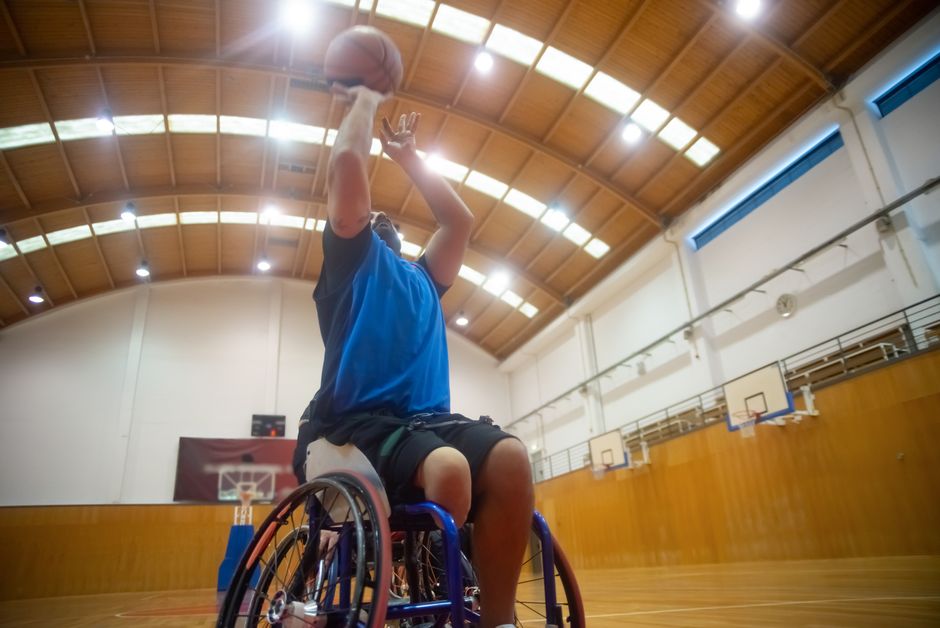
Shooting in basketball is the act of throwing the ball toward the basket with the aim of scoring. It is one of the game’s fundamental skills, alongside dribbling, passing, rebounding, and defending. A successful shot sends the ball through the hoop without the shooter committing a violation.
Players shoot from different areas of the court and use different techniques depending on distance, defensive pressure, time remaining, and the type of play. A close-range layup, a jump shot from the perimeter, and a free throw are all forms of basketball shooting.
How scoring works when a player shoots
A field goal made during normal play is worth two or three points. A shot taken inside the three-point line counts for two points, while a successful attempt from behind the three-point line counts for three. The exact line can vary between competitions, but the principle is the same.
A free throw is an uncontested shot taken from the free-throw line after certain defensive fouls. Each successful free throw is worth one point. Unlike a regular field-goal attempt, the shooter cannot jump over the line before the ball reaches the basket.
The ball must pass completely through the hoop from above for the basket to count. If a defender legally blocks the attempt before it reaches the basket, the shot does not count. A player can also miss by hitting the rim, backboard, or floor without the ball going through the hoop.
Main types of basketball shots
Layup
A layup is a close-range shot taken while moving toward the basket. The player usually takes two steps after gathering the ball, jumps off one foot, and releases the ball near the backboard. Layups are among the highest-percentage shots because they are taken close to the hoop.
Jump shot
A jump shot is released while the player jumps vertically. It is commonly used from the mid-range or beyond the three-point line. The shooter bends the knees, rises under control, and releases the ball near the top of the jump. Jump shots are useful when a defender is close enough to contest a stationary attempt.
Free throw
A free throw is taken from a fixed position with no defender directly contesting the release. Good free-throw shooting depends on a repeatable routine, balanced foot placement, a controlled release, and concentration.
Hook shot
A hook shot is released with one hand while the shooter’s body is turned partly sideways to the basket. The arm follows a curved path, which can make the shot difficult for a defender to block. Post players often use this technique near the basket.
Fadeaway
A fadeaway is a jump shot in which the player leans or moves backward during the release. It creates space from a defender but is harder to control than a balanced jump shot. Players generally use it when a defender takes away a more direct shooting position.
Bank shot
A bank shot uses the backboard to redirect the ball into the hoop. The shooter aims for a suitable point on the backboard rather than directly at the rim. This technique can be effective from certain short and mid-range angles.
Basic shooting technique
Effective shooting starts with balance. The feet should be positioned comfortably, usually with the shooting-side foot slightly ahead or aligned with the other foot. The knees and hips provide power, while the upper body stays relaxed and directed toward the basket.
The shooting hand supports the ball from underneath or slightly behind it, with the fingers spread naturally. The non-shooting hand helps guide the ball but should not push it sideways. As the player extends the legs and shooting arm, the wrist snaps forward so the ball leaves the fingertips with backspin.
A useful sequence is often described as feet, legs, elbow, wrist, and follow-through. The shooting elbow should stay reasonably aligned with the basket, and the hand should finish with the fingers pointing down after release. The exact motion can vary between players, but a consistent release is more valuable than copying someone else’s form exactly.
What makes a basketball shot accurate?
Accuracy depends on several connected factors:
- Direction: The body, elbow, wrist, and hand should send the ball toward the target.
- Arc: A controlled upward path gives the ball a better angle as it approaches the rim.
- Touch: Soft hands help the shooter judge distance and use the backboard or rim effectively.
- Balance: A stable base makes the release easier to repeat.
- Timing: The shot must be released before a defender can block or heavily alter it.
- Follow-through: Holding the finishing position helps reinforce a consistent release.
Shooting percentage is not the only measure of a good shooter. Shot selection also matters. A player who takes open attempts in rhythm may be more effective than one who attempts difficult shots while closely guarded, even if both players can make spectacular baskets.
Common basketball shooting mistakes
Frequent errors include pushing the ball with both hands, allowing the elbow to move too far outward, jumping forward or sideways, and releasing without a complete follow-through. Players may also rely only on their arms instead of using their legs for controlled power.
Another common problem is practicing only from long range. Players usually benefit from building a reliable close-range form first, then gradually moving farther from the basket while maintaining the same release mechanics. Shooting while tired or heavily contested can be useful later, but it should not replace basic repetition with good balance and technique.
Why shooting matters in basketball
Shooting turns possession into points and forces defenders to protect the entire court. A player who can score near the basket creates pressure inside, while a reliable mid-range or three-point shooter can stretch the defense and open passing lanes for teammates.
Good basketball shooting combines physical technique, decision-making, footwork, and confidence. The best shot is not always the most difficult one; it is usually the attempt taken with enough space, balance, and time to give the team a strong chance of scoring.